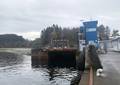
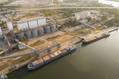
Four tank ships ordered from Ningbo East Shipyard, China are of Non Sea Water Ballast Ships (NOBS) design
Ningbo Dongfang Shipyard has recently won two newbuilding orders for two 6,500dwt tankers and a 4,500dwt pair from Zhejiang Huayun Shipping and Guangdong Zhanjiang Fuda Shipping, which will be the first NOBS ships to be built in China.
The newbuilds will be delivered by 2013 and employed in hauling fuel in Singapore and South East Asia routes.
XED say they have spent 3 years on R&D on the NOBS project, and have obtained the patent rights from the State Intellectual Property Office of the PRC; at present there are no ships of this type in the world. The patent includes the ship types: NOBS tanker, NOBS chemical tanker, NOBS bulker and NOBS containership.
The NOBS tanker will fly the Singapore flag and all four ships are to be classed by BV with annotations – GREEN SHIP (I) and EEDI (I).
Designers claim that the NOBS design is much more responsive to the new EEDI and SEEMP of IMO and saves costs in construction, operation, maintenance and environmental protection.
XED Ship Design claim the 6,500 DWT and 4,500 DWT 'NOBS' tankers can effectively circumvent IMO’S BWM regulations.