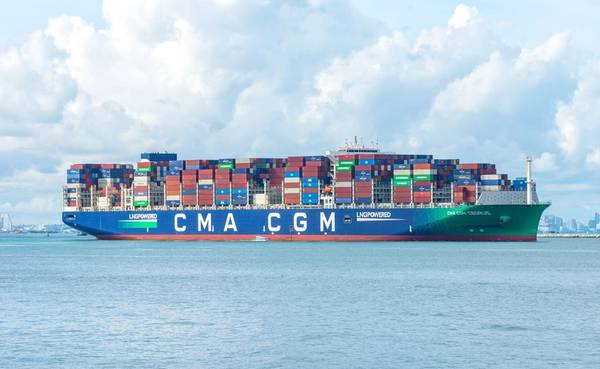
The Maritime and Port Authority of Singapore (MPA), CMA CGM Group and Singapore LNG Corporation (SLNG) signed a Memorandum of Understanding (MOU) to explore the supply and use of liquefied bio-methane, or bio-LNG, as a marine fuel, leveraging Singapore’s existing LNG infrastructure to support shipping decarbonization.The agreement brings together MPA’s regulatory expertise, CMA CGM’s shipping operations and SLNG’s LNG infrastructure capabilities to develop practical pathways for supplying…
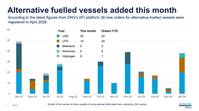
According to the latest figures from DNV’s Alternative Fuels Insight (AFI) platform, 38 new orders for alternative-fueled vessels were placed in April 2026.The majority of these orders (20) were for LNG-fueled vessels. Eight of these were for vessels in the car carrier segment…
A new analysis from WinGD and Envision Energy suggests something the maritime industry has been debating for years ... and likely will be debating for many years to come: the changing economics of zero-emission fuels.For shipowners, the significance is straightforward…
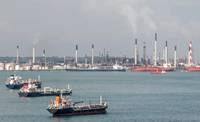
Sumitomo Corporation, Kawasaki Kisen Kaisha, Ltd. (“K” LINE) and NYK Bulkship (Asia) have entered into a memorandum of understanding (MoU) to jointly conduct a Front-End Engineering Design (FEED) study and explore the ownership of a newbuild ammonia bunkering vessel for application in Singapore…
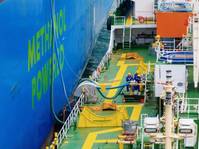
This week, CMA CGM and SIPG Energy successfully completed the bunkering of 3,643 tons of bio-methanol for the CMA CGM Osmium at Yangshan Port in Shanghai. This operation marks CMA CGM’s first bio-methanol bunkering worldwide and sets a new national…
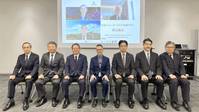
Mitsui O.S.K. Lines, Obayashi Corporation, Kawasaki Heavy Industries, and Chiyoda Corporation have established the Japan–New Zealand Hydrogen Corridor. The consortium will study the commercialization of green hydrogen production in New Zealand and export operations to Japan…
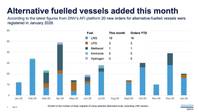
According to the latest figures from DNV’s Alternative Fuels Insight (AFI) platform, a total of 20 new orders for alternative-fueled vessels were placed in January 2026. Activity continues to be dominated by LNG-fueled container vessels, which accounted for 16 of these orders…
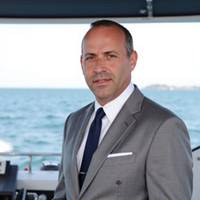
VPS appointed Neil Chapman as the company’s Managing Director of the Americas.Chapman has a wealth of experience in Testing and Inspection, having worked for most of the major TIC companies during his 40 year career. More recently he has held…

The European Union has awarded funding to support the development of carbon capture, utilization and storage (CCUS) in the Øresund region, backing a cross-border project aimed at accelerating renewable energy use and enabling the production of sustainable fuels…
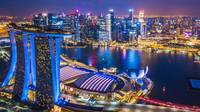
Singapore posted record port performance in 2025, supported by resilient global trade and fuel offtake.The nation achieved a record of 3.22 billion gross tonnage (GT) of vessel arrivals and 44.66 million TEUs of container throughput in 2025 – a 3…
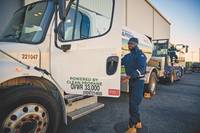
With lower emissions and proven reliability, it’s the ready-now solution for cleaner port operationsAs demand for cleaner energy grows, port authorities and terminal operators face the challenge of finding environmentally friendly options without increasing budgets or sacrificing productivity…

A new report from the Getting to Zero Coalition identifies 25 new green shipping corridors – trade routes designed to demonstrate and scale novel zero-emission fuels, vessels, and technologies – launched this last year, expanding the global total to 84 active initiatives…

The Waterborne Technology Platform has welcomed the EU’s Sustainable Transport Investment Plan (STIP) which it says is key in facilitating the uptake of sustainable alternative fuels.The European Commission published the STIP on November 5,…
The Documentary Committee of BIMCO has adopted a Methanol Annex to its Bunker Terms 2018. The annex is the latest addition to the BIMCO portfolio of contracts and clauses that support the maritime industry’s transition towards alternative fuels and decarbonization…
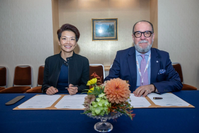
The Global Centre for Maritime Decarbonisation (GCMD) and the International Association of Ports and Harbours (IAPH) have signed a two-year partnership agreement aimed at accelerating the decarbonization of the maritime sector.IAPH has a global…