As the maritime industry mulls the ‘fuel of the future,’ a strong and growing case can be made for propane based on availability, cost and ease of use compared to competitive fuels.
Darren Monzingo, president of FARO Industrial and VP of Engineering for GEM Marine, is a marine engineer and naval architect, and through his work, he’s gained exposure to propane as an industrial fuel. While the maritime industry is prioritizing using CNG/cryogenic fuels, through his research Monzingo noticed that propane is an easy-to-use, readily available energy source of fuel that accomplishes ship fleet needs for productivity, energy expenditure, and emissions reduction. Importantly, he notes that if a vessel is ‘LNG-Ready’, it is ‘Propane-Ready’
"This is a very US-centric view [because] it's not a fuel for everybody," said Monzingo. "If you're living in a country where you have to import it, the story's going to change."
But in the U.S. the propane alternative is compelling, said Monzingo, as "we have so much of it at the moment, partly due to the fact that years of hydraulic fracking has given us access to [new] reserves. You could fuel the U.S. merchant fleet three times over just with the propane we export."
Monzingo does not suggest it's a fuel for everyone, but based on its cost and environmental attributes, it's worth consideration.
"I'm not suggesting every one of us has to go out and do it, but the fact that we can meet these ambitious environmental goals and do it with a fuel that is on the OpEx side is cost competitive with LNG and on the CapEx side is cheaper than LNG because you're not dealing with cryogenic liquids. I think you're doing yourself a disservice if you only look at LNG and do not look at LPG."
Coming from the point of view of the Propane Council, it is assumed that Joe Calhoun is bullish on the value proposition of propane in the maritime sector. But aside from it being a viable fuel, he sees it joining the ever-present 'energy security' discussion.
"Propane adds to our energy security, especially here in the U.S.," said Calhoun. "When you think about the production of propane today, we produce 30 billion gallons of it today here in the U.S., and we use about 10 billion of those today in the continental US. There's a whole lot more of it that we're exporting. So, in terms of security, we have it. It's readily available."
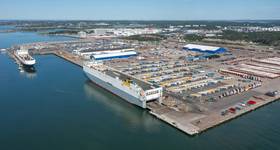
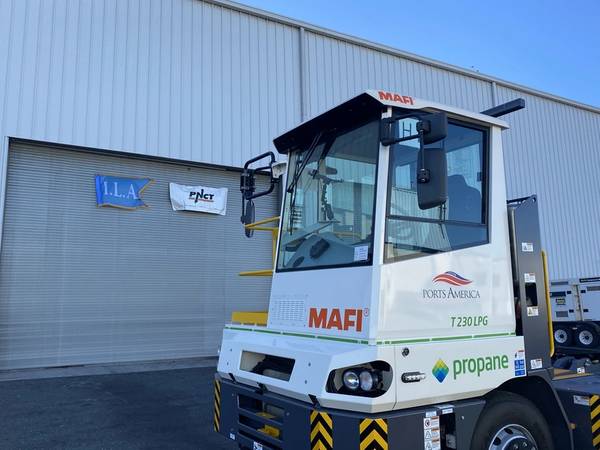
Calhoun also reasons that the conversation stretches through to the other port facility and infrastructure, too.
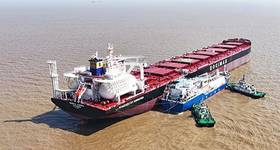
"On water we've got vessels, which if they're hauling propane, are likely using propane to fuel it. Especially in the Pacific Rim, a number of those are fueled with propane," said Calhoun. "The value proposition in propane is not just the fuel itself being less expensive, but the equipment is less expensive and it's readily available. Other value propositions for propane in the US, if you're concerned about ESG like everyone is today, then there is that value proposition as well."
Watch the full interview here: