marine link image
Register now for the Port of the Future Conference • 2 Days, 50 Ports • Houston/Galveston area, TX • April 12–14, 2027

JF Fendercare to Supply Equipment for Terminal Expansion in Singapore

April 23, 2024

Source: JF Fendercare

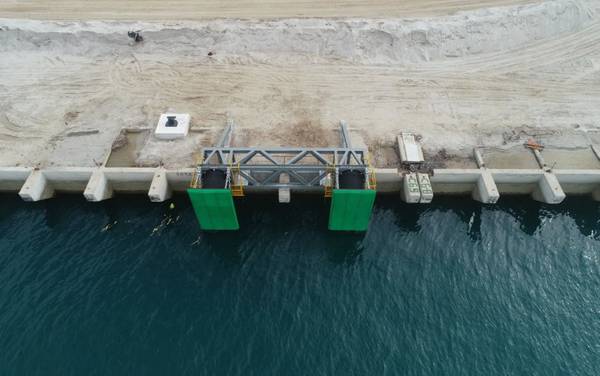
James Fisher Fendercare (JF Fendercare) has been awarded a contract to supply bespoke fixed cell fenders and bollards for a wharf building project in Singapore which aims to consolidate terminal container activities and ensure sustainability.

Initiated by the Singaporean government, the project aims to increase cargo handling capacity through the consolidation of all terminal container activities, thereby reducing inter-terminal haulage operations and, as a result, greenhouse gas (GHG) emissions. The scope of the project includes the reclamation of 387 hectares of land, 23-meter-deep seaports, and 8.6 kilometers of quay wall to accommodate larger container ships.  

The project is expected to be completed in March 2027.  

JF Fendercare has already delivered a significant amount of quayside equipment, including super cell rubber fenders complete with a one-piece steel panel and four ultra-high molecular weight polyethylene (UHMW-PE) pads, as well as 200t cast steel T-head bollards.

Logistics News

Russian Strikes Hit Ukrainian Military Facilities, Vessels

Russian Strikes Hit Ukrainian Military Facilities, Vessels

Most Gulf Shares Lower As Shipping Uncertainties Persist

Most Gulf Shares Lower As Shipping Uncertainties Persist

Oil Tanker Insurance Triples Amidst Global Shipping Tensions

Oil Tanker Insurance Triples Amidst Global Shipping Tensions

Russia Begins Commercial Exports of Vostok Oil

Russia Begins Commercial Exports of Vostok Oil

Subscribe for Maritime Logistics Professional E‑News

Murmansk, a Russian Arctic port, will start shipping grain using fertiliser equipment
Officials alter Danube entry procedure to address Ukrainian shipping queue
Study finds that global biofuel production will increase by nearly 70% in 2030 as a result of the Gulf energy crisis