Increasing port delays in Asia, U.S. and Europe will provide only limited support and MSI predicts rates will fall further in Q3.
After three months of OPEC+ production cuts, tanker markets are feeling the pressure with both crude and products sector earnings moving lower in July according to Maritime Strategies International.
Back in May MSI forecast quarterly average Aframax one year time charter rates to fall from $32,400/day to $21,600/day at a time when spot markets were seeing record levels. MSI believed the realities of the largest quarterly drop in global oil demand ever seen were never going to present truly sustainable positive conditions.
So far MSI’s expectations of a substantial and abrupt decline in tanker markets have played out. In its latest HORIZON Monthly report MSI forecasts Q3 average Aframax one Yr T/C earnings to be $19.9,00/day, illustrating how close the market has moved toward those dramatic predictions.
MSI continues to believe 2020 will be a very uncertain year for the tanker market. One area where conditions have not proved as extreme as expected has been floating storage and in its wider market fundamentals view has reduced the impact of this on 2020 conditions, despite overall volumes still being extremely high by normal standards.
“We expect the downward trend to continue with earnings moving even lower in Q4 with earnings remaining low in Q1 21 with high stock levels meaning that as oil demand recovers, drawdowns will weigh on global trade,” says MSI’s Tim Smith. “Production cuts will still be in force, even though OPEC+ is now in the process of lifting output. U.S. crude production has also fallen steeply, but exports have not seen as big a drop, as U.S. refinery throughput also fell sharply in Q2. As refining recovers, it will also reduce the pool of U.S. exports.”
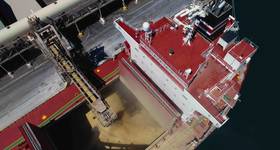
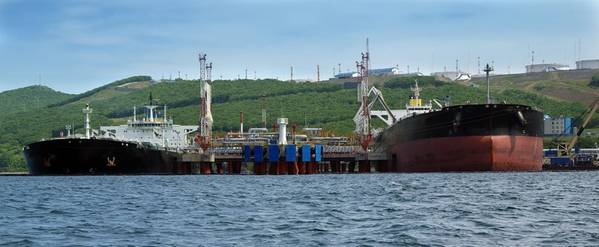
Partially replacing the effects of floating storage are port delays, with a surge in volumes clogging up terminals and constraints imposed by COVID-19 impeding logistics. These have been prevalent in China as a glut of VLCCs has built up, but there are also substantial delays elsewhere in Asia, the U.S. and Europe. This friction will support deadweight demand in 2020 despite the drop in trade volumes, but like floating storage the effect will be temporary.
“Across 2020 there has been a clear increase in average delays. India has seen significant delays since April, after a number of ports declared force majeure and following high crude import levels vessels at Chinese ports are experiencing prolonged delays, with over 30 VLCCs seeing delays of more than 10 days off China in July, and that number is growing,” Smith adds. “Less well publicized have been other areas including Asia, Europe and the U.S. This will support deadweight demand in 2020, countering the huge drop in trade volumes and floating storage though, there is a notable ‘grey area’ around their impact.”