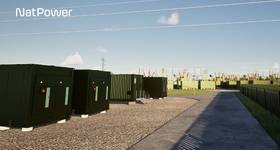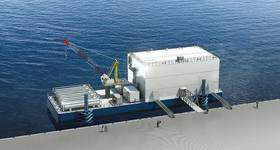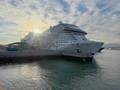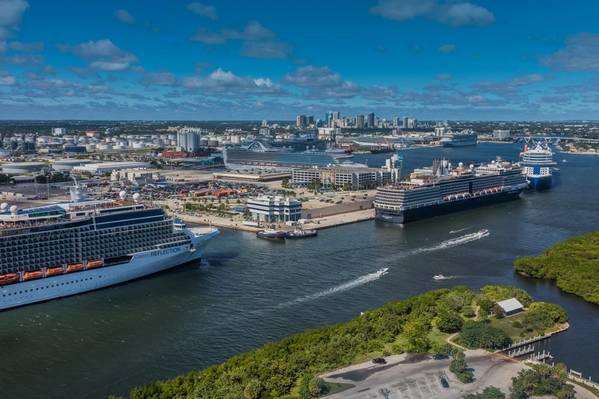
Florida's Port Everglades recently completed a study to add shore power to the Port's eight cruise terminals and has taken delivery of the final report. The study was performed by Moffatt & Nichol, a global infrastructure advisory firm working in cooperation with Florida Power & Light (FPL), Carnival Corporation, Disney Cruise Line, and the Royal Caribbean Group. This comprehensive analysis assessed the capacity of the existing electrical grid and identified the necessary infrastructure upgrades required to deliver shore power to the diverse cruise ships calling Port Everglades. The recommended plan is capable of delivering up to 16 megawatts of electricity simultaneously to each of the eight terminals in accordance with IEC/IEEE 80005 standards.
"Shore power, it's a 'shocking' project because we have been exploring the possibilities of electrification since 2009 when we built Terminal 18 to homeport the largest cruise ships in the world," said CEO and Port Director Jonathan Daniels. "This technology speaks to our core values of strength, resiliency and sustainability. We are ready to harness this alternative for the good of our partners and our community."
To align with Broward County climate change goals, Port Everglades is advancing initiatives to reduce greenhouse gas emissions, including installation of shore power infrastructure. Engine exhaust gases from cruise ships running on-board power plants while docked are contributors to air emissions. Shore power infrastructure enables ships to turn off their engines and connect to the local electric power grid. Full implementation of this shore power and electrification initiative is projected to eliminate 11,366 metric tons of CO2 while reducing NOx and SO2 emissions by 75% and 51%, respectively. This is equivalent to taking 2,470 cars off the road annually. The electricity will be generated by FPL using a variety of energy sources, including natural gas, nuclear, solar and wind.
The estimated cost for the project, including the estimated cost of FPL supply and distribution system upgrades, is approximately $20 million per cruise terminal, for a total cost of $160 million. The project is expected to be financed through federal and state grant funds, contributions from FPL, the participating cruise lines and the county. Implementation will occur in phases. The earliest construction could occur is mid-2024 with all phases completed by the end of 2027.