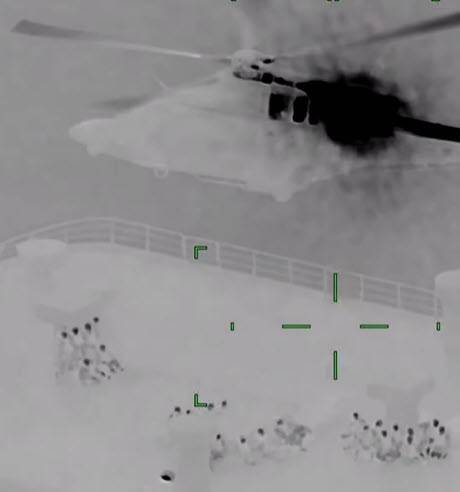
The 34-year-old livestock carrier ship Blue Ocean A, flying the flag of Saint Kitts and Nevis, has been detained at the Italian Port of Cagliari after a port state control inspection found 54 irregularities, 30 of which were considered serious.
The vessel nearly ran aground on January 29 off San Pietro Island due to a main engine failure while carrying 33 crew members.
The inspection revealed problems with firefighting and life-saving equipment, bridge systems, crew emergency training, and living and working conditions.
A 2024 investigation by Animal Welfare Foundation and environmental organization Robin des Bois found that the average age of livestock carriers operating in Europe was 42. Over half of the vessels sail under a black-listed flag.
The issue has continued to concern animal welfare organizations, and in December, a coalition of 36 organizations issued a letter to the Secretary-General of the IMO calling for binding international regulations for livestock carriers, warning that the ageing fleet poses serious and escalating risks to human life, animal welfare, public health, and the marine environment.
The call followed the recent case involving the 52-year-old livestock carrier MV Spiridon II. The rejection of around 2,900 dairy cattle on the vessel raised animal welfare and pollution concerns when, after a long sea voyage, the laden vessel had to return to sea.
Maria Boada-Saña, Veterinarian and Project Manager on Live Animal Transport by Sea at Animal Welfare Foundation, said: “The European Union has started to move towards stronger control of livestock vessels through the revision of the animal transport legislation and increased inspection requirements. While this shows political recognition of the issue, from an animal welfare perspective these steps are still not sufficient to address the deep structural problems she sees in the livestock carrier fleet.
“At present, there is no EU-wide prohibition preventing black-listed vessels from operating or loading animals in EU ports. Discussions currently taking place within the European Council on specific articles of the upcoming transport regulation suggest that black-flag livestock vessels could soon be banned from operating in the EU. While we welcome this as an important step in the right direction, it is not sufficient. Grey-flag vessels, which are still very often used in the EU to load animals, remain a major and very relevant problem.”
Evidence gathered in the 2024 analysis shows that many of these vessels have serious technical and structural deficiencies that can severely impact the welfare of transported animals.
Furthermore, says Boada-Saña, a large proportion of livestock vessels currently operating are not originally built to transport animals but were converted late in their lifespan, at a stage when many should already have been scrapped. “These vessels do not only represent a risk for the animals transported, but also for crew safety and for the marine environment in case of accidents, fires, or pollution incidents. This raises serious ethical and safety concerns.
“Regarding the Blue Ocean A, what we would like to see is full transparency about inspections and compliance history. If serious deficiencies are confirmed, the vessel should not continue transporting animals. The Blue Ocean A case also illustrates how engine failures and major technical incidents on ageing or converted vessels may occur more frequently than is often assumed.”
She calls on the EU to move towards stricter vessel approval criteria, exclusion of high-risk flag vessels (including grey flag vessels), and a clear transition away from long-distance live animal exports towards trade in meat, carcasses, or genetic material.
“Animals transported by sea are sentient beings, and their welfare must not remain secondary to trade considerations. The EU now has a real opportunity to lead globally on this issue, and we strongly urge decision-makers to take it.”
The EU would be following countries such as Australia and New Zealand which have enacting full or partial bans on their own live export trades.
Former live export veterinarian from Australia Dr Lynn Simpson says the Blue Ocean A deficiencies don’t come as a surprise. “The Australian trade has been somewhat protected by the strict regulations and standards imposed by AMSA. However, maritime safety will remain at unnecessary risk while the small number (109 ships currently trading globally) of old (average age greater than 40 years old) ships are not unified in a code to ensure greater safety standards.
“Livestock carriers exhibit many unique challenges to maritime safety, from corrosive manure immersion of their infrastructure, dynamic ‘cargo’ effects, and the fact that the animals are easily perishable due to weather, sea and mechanical factors.”
However, Australian Livestock Exporters’ Council (ALEC) Chief Executive Officer Mark Harvey-Sutton said: ““Disappointingly, some recent public commentary has reduced what is a complex, intricately managed and highly regulated system to a narrow discussion focused on ship age.
“The idea that a newer ship automatically guarantees a successful voyage is misleading - livestock exports are not container shipping. Animal welfare outcomes depend just as heavily on livestock preparation, supply chain management, loading practices, stocking densities, ventilation management, crew expertise and onboard procedures.”
By global standards, ships servicing Australia’s live export trade are relatively young, well-regulated and subject to some of the most stringent operational and animal welfare oversight in international shipping, he said. “If a vessel doesn’t meet requirements, it doesn’t sail, regardless of its age.”
While fleet renewal remains important and investment in new vessels should be encouraged, Harvey-Sutton said it must be framed as a strategic progression rather than a crisis narrative.
He said portraying the fleet as being “on borrowed time” and a threat to the trade’s future was misleading. “Building a modern livestock carrier requires enormous capital and long-term confidence. Shipowners and financiers need certainty that the trade will endure and regulatory settings will remain stable,” he said.
“They also need certainty that there will be a concerted effort to address inefficiencies within our port systems, particularly around inspection processes, pilot fatigue management plans, berth congestion and industrial relations.
“A more balanced discussion is therefore essential. Fleet renewal matters, but so does recognizing Australia’s individual challenges and strengths.
“Ship age is part of the discussion, but it’s far from the whole story.”