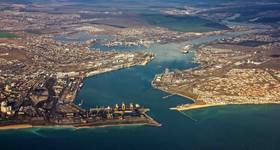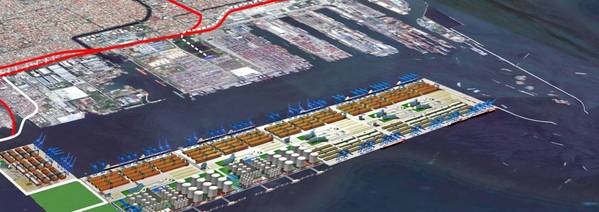
Van Oord wins contract with PT PP (Persero) TBK for deepening the port and reclaiming land for a new terminal area in Tanjung Priok, Jakarta.
The contract is part of the Kalibaru North Container Terminal Phase 1 Project, which will expand the port of Tanjung Priok by 4.5 million TEUs (Twenty-foot Equivalent Units).
The client for the large port expansion is IPC, Indonesian Port Corporation. The entire project will take approximately three years to complete and provides a sustainable impetus for the economic growth of Indonesia.
The contract value amounts to more than EUR 150 million. The dredging work will begin in the second quarter of 2013 and will be completed over the course of 24 months.
The Tanjung Priok project includes the deepening of the port, including expanding and deepening the access channel. A total of 25 million cubic metres of material will be moved. Most of the material will be pumped into closed basins adjacent to the new terminal for further expansion of the port. Approximately 10 million cubic metres of sand will be removed from the seabed in preparation for construction of the new terminal. Van Oord will be deploying trailing suction hopper dredgers, a cutter suction dredger and a backhoe.