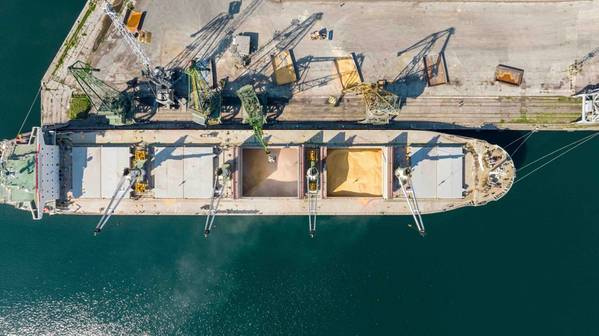
EU wheat fell on Monday as dealers assessed the possible impact of disruption to Russian grain exports after Ukrainian attacks on shipping in the Sea of Azov restricted vessel movement in the region, a key route for Russian wheat shipments.
“Perhaps the Azov disruption will not be as bad as initially feared. We have seen in the past with the Ukrainian shipping corridor that shipment problems in the Russian/Ukrainian war zone can be sorted out quickly,” a German trader said.
September milling wheat on the Paris-based Euronext exchange was down 1.1% at €213.75 ($243.74) a ton at 1523 GMT.
The contract had surged 5.5% on Friday after Ukraine attacked several Russian tankers in the Sea of Azov, which connects to the Black Sea, amid fears Russia might close the sea to all shipping.
The route, which is used by a quarter of Russia's grain exports, remained restricted on Monday following continued Ukrainian attacks on tankers and other commercial vessels.
One source told Reuters commercial vessels could move freely in the Sea of Azov but could not enter or leave via the Kerch Strait. A third source said traffic through the Sea of Azov was restricted but not fully stopped.
“Obviously the Azov issue is serious but we will have to see if a method of protecting merchant shipping can again be found,” another trader said.
“In the near term, if the Azov disruption continues, demand could be transferred to the Russian Black Sea export port of Novorossiysk, so much Russian wheat is still expected to hit the world market when this summer’s crop gets up to full speed.”
“The big question is how long the Azov shipping disruption continues. If disruption continues for the longer term, demand could switch to Romania, Bulgaria and the west EU.”
(Reuters)