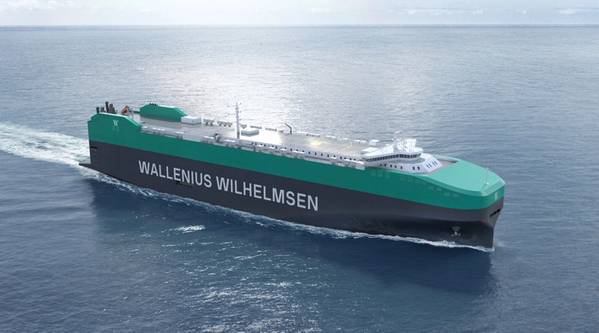
Wallenius Wilhelmsen, the world’s largest RoRo vessel operator, has declared options to build four additional next-generation Shaper Class pure car and truck carrier (PCTC) vessels.
The 9,300 CEU methanol dual fuel vessels can utilize alternative fuel sources, such as methanol, upon delivery.
They will also be ammonia-ready and able to be converted as soon as ammonia becomes available in a safe and secure way.
These next generation vessels will play a key role in the introduction of Wallenius Wilhelmsen’s net zero emissions end-to-end service by 2027.
“Together with our customers we are committed to further shaping our industry and accelerating towards net zero. These new vessels are a vital part of that journey,” said Xavier Leroi, EVP & COO Shipping Services.
This latest commitment brings the total number of Shaper Class vessels currently on order with Jinling Shipyard (Jiangsu) to eight. Wallenius Wilhelmsen also retains further options.
The first of the Shaper Class vessels already ordered are expected to be delivered in the second half of 2026. The four additional vessels under the declared options will be delivered between May and November 2027.