Titan Clean Fuels has signed an off-take agreement with green energy supplier TURN2X to deliver e-Methane to the maritime industry from 2028 onwards.
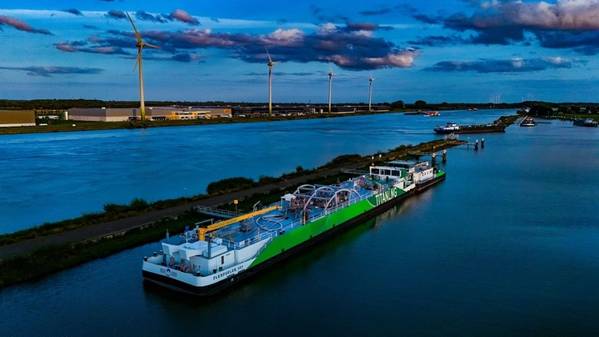
Titan operates seven bunker vessels and is able to deliver in around 52 ports today.
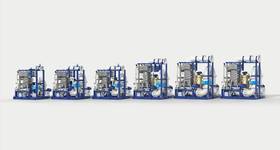
TURN2X’s modular and load-flexible production plant in Miajadas, Spain, converts renewable energy and biogenic CO₂ into ISCC-certified e-methane. This green fuel is then fed into the grid and transported to major European ports, where Titan bunkers it to ship operators.
E-methane can achieve net-zero greenhouse gas (GHG) emissions on a well-to-wake basis, with exact reductions depending on the equipment and engine technology used. It also offers an up to 95% reduction of NOx and achieves virtually zero SOx and particulate matter emissions.
These emissions reductions mean ships using e-methane will be eligible for FuelEU Maritime overcompliance and the commercial benefits of banking and pooling. Shipping companies with a compliance surplus or deficit can join Titan’s FuelEU pool.
TURN2X’s e-methane is also a certified renewable fuel of non-biological origin (RFNBO). When calculating FuelEU performance, shipping companies can essentially double-count the impact of RFNBO from 2025 to 2033. If RFNBO still makes up less than 1% of reported maritime energy use by 2031, ships may also be mandated to use a minimum of 2% RFNBO from 2034.
With the EU now committed to phasing out Russian LNG, ending short-term contracts from 25 April this year and all long-term contracts from 1 January 2027, scaling up the production of green fuels like e-methane can directly support energy security.
E-methane can be dropped into all existing LNG infrastructure with little to no modification required – including bunkering equipment, terminals and LNG dual fuel vessels. This means e-methane is supported by LNG bunkering infrastructure in approximately 222 ports worldwide and can be used in the around 850 LNG-fueled vessels currently in operation and the further 642 on order.
E-Methane has 1.6 times the energy density of methanol and twice the energy density of ammonia. A fuel with a lower energy density means either larger fuel tanks are required, leaving less space for revenue-generating cargo, or more frequent bunkering operations are needed.