Russia's Aston to Build 4 New Ships
By Aiswarya Lakshmi
April 12, 2018
The JSC Aston, one of Russia's largest producers of foodstuffs and ingredients, and is a leading exporter of agricultural goods and vegetable oils, has signed the contracts with two Chinese shipyards for a construction of 4 ships.
Addressing the unnamed Chinese shipbuilders Vadim Vikulov has mentioned the following: "The long way begins always with a first step. I am proud that we have done it. And so our long-term idea to continue build together the ships in Russia is coming true.”
A press release stated that out of the series of 10 modern ships Aston planned, these four will be with a dead weight of 8000 ton — that is the maximal limit to enter the Don ports. The company operates ports terminals on the river Don.
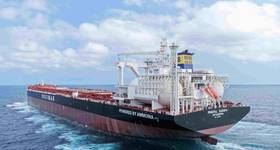
Earlier, past week, the Company has taken in operation the fourth see vessel with a dead weight of 45000 ton (Handymax).
The Aston group includes factories for production and processing vegetable oil in Millerovo and Morozovsk (Rostov region), also factories for starch and syrup production in Ryazanskaya and Vladimirskaya regions, elevators in Rostov and Krasnodar regions, port terminals on the river Don, shipbuilding yard, the company has its own dry-cargo vessel for river-sea navigation oil tankers, and bulkers for grain transportation.