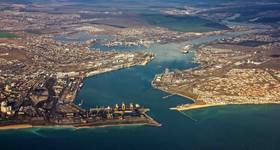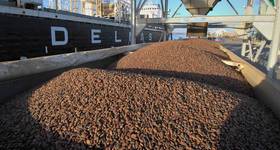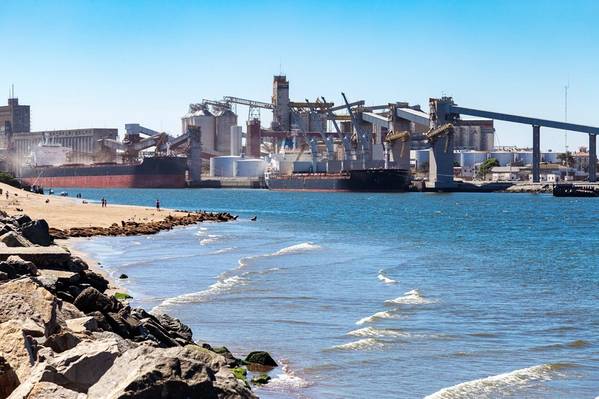
A strike launched by Argentine oilseed industry workers has halted grain shipments from local ports with soybean processing plants, the country's Ports and Maritime Activities Chamber (CAPyM) said on Wednesday.
Argentina is a top global supplier of the processed soybeans, widely used across industries for products ranging from foods to biodiesel.
The strike was launched early on Tuesday by two industry unions, the SOEA oilseed factory worker union as well as the oilseed federation, after they could not reach an agreement in a meeting with sector companies as they demand better salaries amid high inflation.
CAPyM head Guillermo Wade told Reuters that ports that are not affiliated with the oilseed federation union are operating normally, but the rest have halted operations.
Only two ports among the country's main farm shipping hubs, all located north of the city of Rosario on the Parana River, do not host soybean crushing plants. One belongs to global commodities giant Archer Daniels Midland and the other to local firm ACA.
More than 80% of Argentina's grains and grain derivative exports are shipped from ports located north of Rosario, including those operated by major grains traders Cargill and Bunge.
(Reuters - Reporting by Maximilian Heath; Writing by Aida Pelaez-Fernandez; Editing by David Alire Garcia)