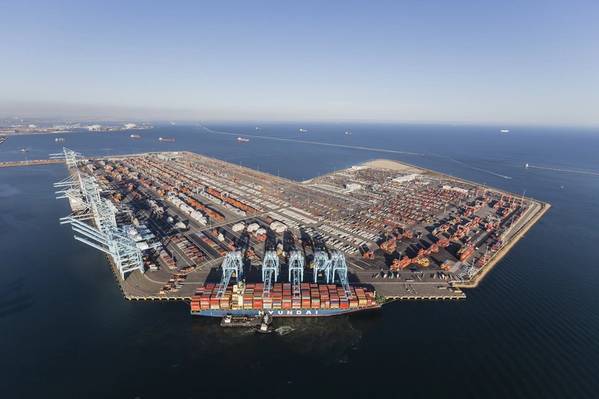
The U.S.' busiest seaport reported a rise in monthly cargo volumes following the steep drop caused by the coronavirus pandemic and ongoing U.S.-China trade tensions.
The Port of Los Angeles said it moved 856,389 twenty-foot equivalent units (TEUs) in July, its busiest month thus far of 2020. It was also the second-best July in the port’s history, trailing July 2019 by 6.1%.
“Fewer canceled sailings and 11 additional ‘ad hoc’ or unscheduled ship calls helped drive both imports and exports higher than recent months but still short of last July’s all-time record,” said Port of Los Angeles Executive Director Gene Seroka. “Preliminary data for August indicates solid volumes as retailers continue restocking inventories and preparing for the year-end holiday season.”
July loaded imports decreased 4.3% to 456,029 TEUs compared to the previous year. Loaded exports dropped 21.7% to 126,354 TEUs. Empty containers declined 0.1% to 274,007 TEUs. In total, July volumes totaled 856,389 TEUs.
Seven months into 2020, overall volumes are 4,618,278, a decline of 15.3% compared to 2019.