marine link image
Register now for the Port of the Future Conference • 2 Days, 50 Ports • Houston/Galveston area, TX • April 12–14, 2027

Port of Oakland: 2025 Imports, Exports Grow

March 19, 2025

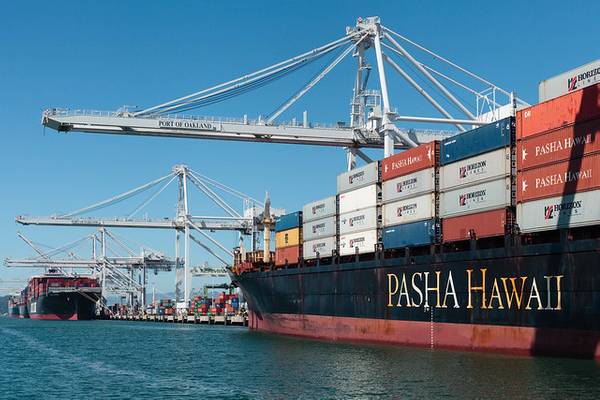
The Port of Oakland starts 2025 with growth in both imports and exports. Credit: Port of Oakland

The Port of Oakland starts 2025 with growth in both imports and exports. Loaded container volume recorded 146,187 TEUs (twenty-foot containers) in January 2025. This is an 8.5% increase over January 2024, when 144,405 TEUs passed through the Port.

Loaded imports experienced a 13% increase this year. The Port processed 81,453 TEUs in January 2025, compared to 72,081 TEUs in January 2024.

Loaded exports registered more modest growth, rising 3.4%, with 64,735 TEUs passing through Port facilities in January 2025, in contrast to 62,596 TEUs in January 2024.

Empty imports were reduced by 26.2%, with 12,625 TEUs leaving the Port in January 2025, compared to 17,117 TEUs in January 2024.

Empty exports increased 19.8% in January 2025. The Port processed 34,363 TEUs this January, versus 28,694 TEUs in January 2024.


Logistics News

A Ceasefire Would Allow Russia to Restart 80% of Black Sea Grain Export Terminals

A Ceasefire Would Allow Russia to Restart 80% of Black Sea Grain Export Terminals

Aderco's 2055G+: Emissions Performance with Shared, Verifiable Data

Aderco's 2055G+: Emissions Performance with Shared, Verifiable Data

ARC Freedom Enters ARC's U.S.-Flagged Fleet

ARC Freedom Enters ARC's U.S.-Flagged Fleet

NYK Contributes to Industry Insight on Ammonia-Fueled Vessels at IMO

NYK Contributes to Industry Insight on Ammonia-Fueled Vessels at IMO

Subscribe for Maritime Logistics Professional E‑News

Denmark's central banks expects a 4% growth in GDP by 2026, driven by the pharmaceutical industry
Saudi Arabia restarts East West oil pipeline, according to sources
Study finds that global biofuel production will increase by nearly 70% in 2030 as a result of the Gulf energy crisis