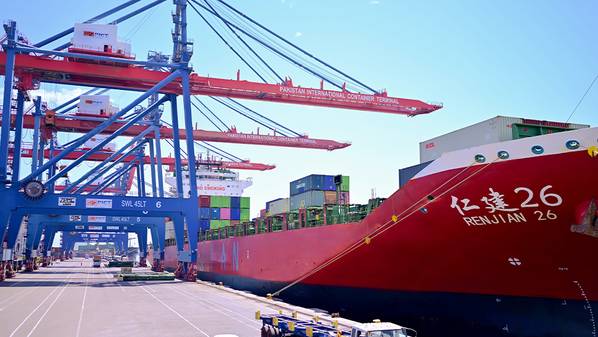
Pakistan International Container Terminal Limited (PICT), the International Container Terminal Services, Inc. (ICTSI) subsidiary operating at the Port of Karachi, has partnered with Singaporean shipping line SeaLead to establish a direct service between Pakistan and Australia.
Calling at regional ports across Malaysia, Australia and Pakistan, the newly launched ASI service enables easy and efficient connection between markets in South Asia and Australia. With the arrival of the service at the Port of Karachi, PICT looks to strengthen trade patronage with global customers and cater to growing trade demands.
PICT says the ASI service will substantially benefit importers and exporters through the faster and more cost-efficient route that provides direct access to Asian and Australian ports.
The ASI service, which handles both shipper-owned and carrier-owned containers, is also expected to provide PICT’s trade allies with a competitive edge within the industry. With Pakistan as a commercial hub connecting several geographical regions, the PICT-SeaLead partnership will boost the country’s foreign trade through the enhanced and efficient access to and from Australian markets.