Nigeria Opens 'Game Changer' Billion-dollar Deep Seaport

January 25, 2023

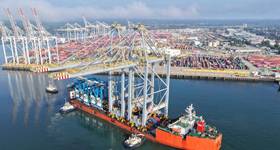
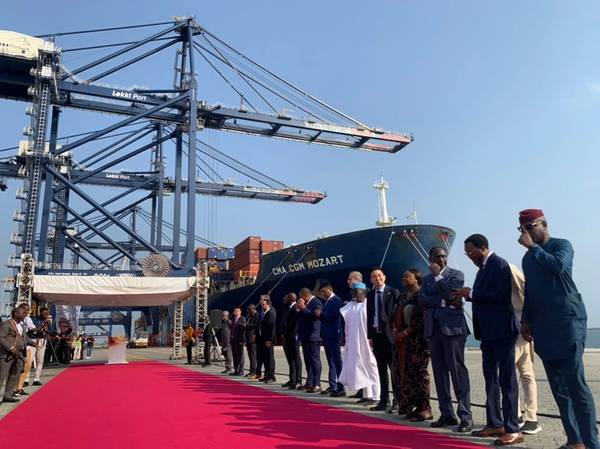
The US$1.5 billion Lekki Deep Sea Port is commissioned in Lagos, Nigeria. (Photo: Nigerian Ports Authority)

Nigeria opened a billion-dollar Chinese-built deep seaport in Lagos on Monday, which is expected to ease congestion at the country's ports and help it become an African hub for transshipment, handling cargoes in transit for other destinations.

President Muhammadu Buhari has made building infrastructure a key pillar of his government's economic policy, and hopes that this will help his ruling party win votes during next month's presidential election.

The new Lekki Deep Sea Port is 75% owned by the China Harbour Engineering Company and Tolaram group, with the balance shared between the Lagos state government and the Nigerian Ports Authority.

"This is a transformative project, game changer project. This project could create at least 200,000 jobs," Chinese Ambassador to Nigeria Cui Jianchun told Reuters after the port was commissioned by Buhari.

China is among the largest bilateral lenders to Nigeria and has funded rail, roads and power stations.


(Reuters - Writing by MacDonald Dzirutwe; Editing by Jan Harvey)
Logistics News

Turkey Tenders to Import 255,000 Metric Tons of Feed Barley

Turkey Tenders to Import 255,000 Metric Tons of Feed Barley

CK Hutchison Launches Arbitration over Panama Canal Ports Contract Ruling

CK Hutchison Launches Arbitration over Panama Canal Ports Contract Ruling

U.S.-Flag Shipping on the Great Lakes Down in 2025

U.S.-Flag Shipping on the Great Lakes Down in 2025

Port of Virginia Advances Capacity with Addition of ULCV Berth

Port of Virginia Advances Capacity with Addition of ULCV Berth

Subscribe for Maritime Logistics Professional E‑News

Emirates could order Airbus A350-2000 wide-body jets
Lufthansa, Germany's national airline, celebrates its 100th anniversary by examining Nazi past
DSV aims to lower freight rates but faces port pressures with the return of Red Sea routes