A new study from Kongsberg Maritime has identified a range of European passenger and freight routes with strong potential for the introduction of fully electric RoPax vessels, particularly across busy short‑sea corridors in Northern Europe.
Highlighting the opportunity for decarbonization in short‑sea shipping, the analysis assessed ferry routes across the continent, identifying several promising candidates, including Dover–Calais, Tallinn–Helsinki, and key services linking Scandinavia, Germany and other Baltic destinations.
The study was driven by rapidly advancing battery capabilities, falling energy‑storage costs, and the accelerating impact of EU ETS and FuelEU Maritime regulations. Taken together, these factors are now shifting the economics in favour of zero‑emission vessels on high‑frequency, short‑distance routes.
According to the study, fully electric RoPax vessels operating between 2030 and 2040 could deliver 8 to 15% lower lifetime costs compared to diesel‑powered alternatives, despite higher upfront investment. Operational cost reductions of 20 to 27% are achievable through lower energy costs and the removal of emissions‑related expenses.
Oskar Levander, Vice President Business Development – Emerging Solutions at Kongsberg Maritime, said the industry has reached a critical turning point: “Just a few years ago, diesel RoPax vessels held a clear economic advantage. That is no longer the case. Battery‑electric ships are now not only feasible but commercially compelling on a growing number of high‑frequency routes.”
Among the European services examined, several routes stand out due to a combination of short sailing distances, high utilisation and favourable port conditions. Corridors such as Dover–Calais, Tallinn–Helsinki, and a number of Scandinavian and Baltic connections offer particularly strong foundations for electrification, with infrastructure readiness and traffic density playing a key role.
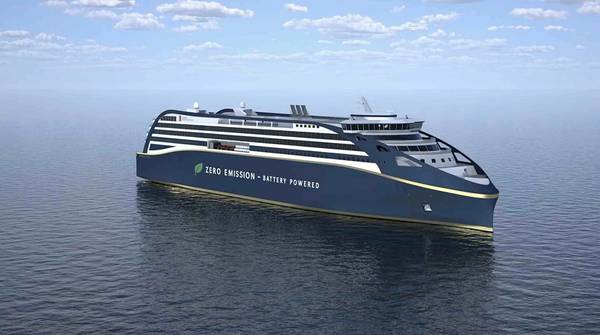
To support operators making long‑term investment decisions, Kongsberg Maritime has developed two fully electric RoPax concept designs: a cargo‑focused vessel optimized for efficient operations at lower speeds, and a higher‑speed passenger‑oriented design suitable for routes with strong public‑transport and tourism demand.
Both RoPax designs are more than 200 meters in length and include modular battery rooms, intelligent energy‑management systems, and auto docking and auto crossing capabilities. They feature advanced propulsion set‑ups with electric podded propulsors, aiming to reduce system complexity and improve overall energy efficiency.
While the study acknowledges that port‑side charging infrastructure remains a challenge, it also highlights growing momentum across the maritime value chain. Progress will require close collaboration between shipowners, ports, grid operators and cargo stakeholders.
“For many operators, the question has shifted from whether electrification will happen to when,” Levander added. “A number of major European routes are now approaching the point where full electrification is both technically and commercially viable.