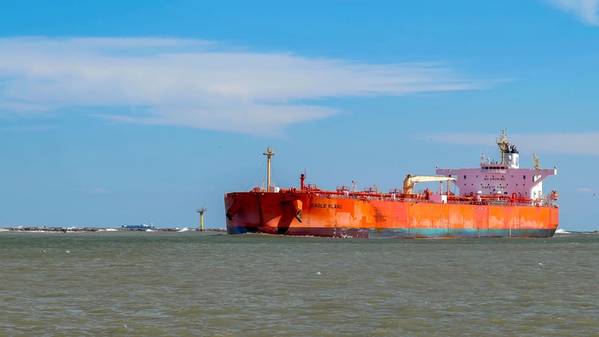
Imports of fuel oil bound for the U.S. Gulf Coast fell to a five-year low last month as refiners ran more cheap, heavy Canadian crude and geopolitical tensions in the Middle East pressured fuel oil flows.
Fuel oil deliveries to the Gulf Coast dwindled in February to just 318,000 barrels per day (bpd), a 20% drop from the prior month and marking their lowest level since February 2019, data from tanker tracking firm, Kpler showed.
Heavy fuel oil feedstocks like high sulfur fuel oil and other heavy residues are used to make higher value products like gasoline and diesel.
Refiners can offset their need to import them by doubling the amount of fuel oil they produce themselves with a heavier crude slate rather than processing lighter blends, according to refining data provider Refinery Calculator.
U.S. refineries have been running more heavy Canadian crude because of its ample supply, with Gulf Coast refiners ramping up their intake by around 10% on the year, according to data from Refinery Calculator.
Western Canadian Select crude (WCS) traded at the Houston hub has carried a wide discount to the global Brent benchmark, hitting $11.92 per barrel in the fourth quarter of last year from $9.78 per barrel in the third quarter, according to a note from TPH&CO.
WCS became more readily available this month after BP's 435,000 bpd Whiting refinery, the largest plant in the Midwest and a key buyer of the Canadian grade, went offline after an unplanned outage on Feb. 1.
As a result, domestic residual fuel oil production climbed to a more than four-year high in the week to Feb. 16, at 462,000 bpd, up from 350,000 bpd from the previous week, according to weekly data from the Energy Information Agency (EIA).
U.S. Gulf Coast fuel oil imports have also been curtailed following attacks by Houthi rebels in the Red Sea, which have disrupted trade flows and driven up shipping costs by diverting vessels away from the Suez Canal.
This has weighed particularly on imports from the Middle East, including Iraqi and Fujairah high sulfur fuel oil loadings, Energy Aspects analyst Royston Huan said.
And a European fuel oil supply squeeze has pushed more barrels to Europe, where prices are higher, according to Energy Aspects.
"It looks like all roads lead to Europe", said Steve Sinos, a managing partner at Blue Lacy Advisors.
The arbitrage is closed for European and Asian high sulphur fuel oil deliveries to the Gulf Coast said Sinos, adding that moving this grade from Europe to the Gulf Coast could result in a $40 per ton loss due to current freight rates.
(Reuters - Reporting by Georgina McCartney, additional reporting by Arathy Somasekhar; Editing by Marguerita Choy)