After several years of volatility, 2025 became the year the global shipping markets began to reset. Not collapse—but recalibrate.
According to Veson Nautical’s 2025 End-of-Year Market Report, the past year was defined by persistent geopolitical disruption, tightening environmental regulation and growing uncertainty over future fuel pathways. Red Sea instability continued to distort global trade flows, FuelEU Maritime and EU ETS added cost and complexity, and owners across nearly every sector adopted a more cautious stance toward fleet expansion.
As the industry enters 2026, the signals are clear: the era of blanket optimism is over, replaced by highly segmented markets where vessel size, age, fuel profile and trade exposure matter more than ever. We've distilled the Veson 67-page report into some key highlights below:

Dry Bulk: Larger Tonnage Enters 2026 with Momentum
Dry bulk shipping exits 2025 on relatively firm footing, particularly at the larger end of the spectrum. Capesize vessels benefited disproportionately from extended voyage distances caused by Red Sea diversions, pushing ton-mile demand higher and driving strong earnings.
That momentum is likely to carry into early 2026. Capesize asset values rose more than 20% year-on-year in 2025, and while freight sentiment softened in Q4, underlying fundamentals remain supportive. The anticipated ramp-up of Guinea’s Simandou iron ore exports could further strengthen long-haul demand over the medium term.
However, newbuilding restraint will be critical. Ordering in 2025 fell to its lowest level since 2019, reflecting high prices, yard congestion and regulatory uncertainty. If owners maintain discipline, supply growth should remain manageable.
Smaller bulk segments—Supramax and Handysize—enter 2026 with less clarity. These vessels benefited less from rerouting dynamics and saw weaker value performance, particularly for older tonnage.
2026 outlook: Constructive for Capes and Panamax; selective and age-dependent elsewhere.
Tankers: Bifurcation Deepens
The tanker market heads into 2026 as one of the most clearly bifurcated sectors in shipping.
Crude tankers—VLCCs, Suezmaxes and Aframaxes—remain well supported. Sanctions-driven inefficiencies, shadow-fleet dynamics and continued routing disruptions have tightened effective supply. Chinese crude stockpiling late in 2025 pushed the market toward contango, reinforcing demand for large crude carriers.
Product tankers tell a very different story. LR1 and MR segments suffered meaningful value declines in 2025 amid weakening clean petroleum product demand and rising competition. That pressure is unlikely to abate quickly in 2026 unless refining margins and product flows improve materially.
Newbuilding activity contracted sharply in 2025, but fleet renewal pressure remains real—especially as environmental regulation tightens and older tonnage becomes increasingly disadvantaged.
2026 outlook: Crude tankers supported; product tankers face continued headwinds.
Containers: From Tightness to Transition
Container shipping enters 2026 at a turning point.
In 2025, extended Cape of Good Hope routings inflated TEU-mile demand and kept charter markets firm, particularly for mid-size and feeder tonnage. Values for 10- to 25-year-old Panamax and Handy vessels surged as buyers—led by MSC—scrambled for available tonnage.
That dynamic is expected to change in 2026.
As security conditions permit a gradual return to Suez Canal transits, sailing distances will shorten. At the same time, a substantial newbuilding delivery wave is scheduled to hit the water, particularly in larger vessel classes. Veson data suggests global container supply could grow by nearly 6%, while TEU-mile demand weakens.
The result: pressure on freight rates and asset values, especially for larger ships. Mid-size tonnage should remain comparatively resilient, but the market’s balance will deteriorate.
2026 outlook: Transition year—tightness fades, oversupply risk rises.
LPG: Volatile but Balanced
LPG shipping moves into 2026 with mixed signals. VLGC earnings proved highly volatile in 2025, driven by geopolitical shocks, tariff uncertainty and strong U.S. export growth. Asset values for large gas carriers held firm, while mid-size gas carriers underperformed.
Newbuilding activity collapsed in 2025 after two strong ordering years, suggesting owners are stepping back just as supply risks begin to emerge in some size classes.
Looking ahead, growing LPG export volumes from the U.S. and Middle East should support demand, but orderbook-to-fleet ratios near 50% in certain segments could weigh on earnings.
2026 outlook: Balanced overall, with volatility driven by trade policy and fleet growth.
LNG: Oversupply Dominates the Narrative
Few sectors enter 2026 under as much pressure as LNG shipping.
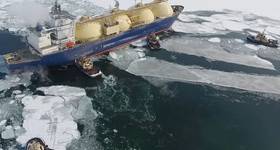
Delayed liquefaction projects, aggressive fleet growth and muted charter demand pushed one-year time-charter rates for large LNG carriers down roughly 60% in 2025. Asset values fell across all sizes, with older steam-turbine vessels hit hardest.
While new LNG export projects are coming, vessel supply is expected to outpace demand again in 2026. Demolition activity doubled in 2025 and is likely to increase further, but not fast enough to rebalance the market in the near term.
2026 outlook: Continued softness; scrapping accelerates, recovery delayed.
Offshore, Vehicle Carriers & RoRo: Supply Discipline Matters
Offshore support vessels enter 2026 in a quality-driven market. Utilization softened slightly in 2025, but modern tonnage continued to appreciate while older vessels lost value. Ordering remains constrained, setting up a gradual tightening as fleet renewal pressures grow.
Vehicle carriers remain one of shipping’s tightest sectors. Newbuilding remains concentrated in China, secondhand availability is limited, and demolition is virtually nonexistent. That tightness should continue to support asset values into 2026.
RoRo and ferry markets face macroeconomic pressure in Europe, compounded by FuelEU Maritime and ETS costs. Still, limited fleet growth and high replacement costs continue to underpin values.
2026 outlook: Stable to firm where supply remains constrained.
The Bottom Line for 2026
Across sectors, the message is consistent: shipping is no longer a rising tide lifting all vessels.
2026 will reward owners with modern, well-positioned tonnage and punish excess capacity, older ships and poorly timed expansion. Regulatory pressure, geopolitical uncertainty and fleet renewal economics will increasingly dictate winners and losers.
The next cycle has begun—but it will be sharper, more selective and far less forgiving.