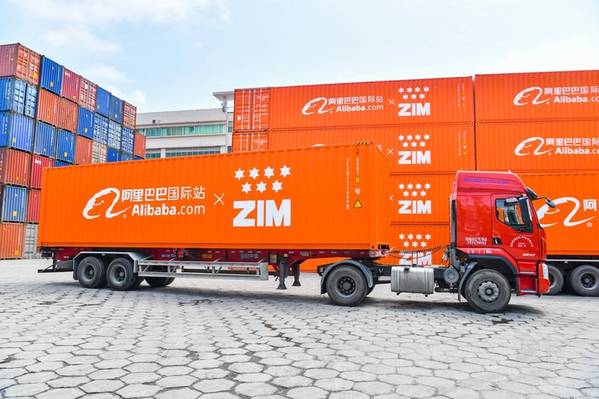
Israeli container shipping company ZIM Integrated Shipping Services Ltd. announced on Monday it has extend for two more years its cooperation agreement with the world's leading B2B eCommerce platform Alibaba.com, a business unit of Alibaba Group.
The agreement which enabled Alibaba.com sellers to book and purchase sea freight on ZIM and logistic services from ZIM Logistics China, a wholly-owned subsidiary of ZIM, has now been expanded to include serving Alibaba.com buyers as well.
Eli Glickman, ZIM President & CEO, said, “Since we launched the initial agreement with Alibaba.com, it has proven to be a highly successful and mutually beneficial partnership. We continue to position ZIM as a leading eCommerce service provider, while creating significant advantages for customers. It is part of our innovative strategic vision, and we are very proud to extend and expand this partnership with Alibaba.com to enhance the customer experience and further capitalize on growing eCommerce trends.”
Kuo Zhang, General Manager of Alibaba.com, said, “In the next phase of the collaboration, we can offer global buyers more options and choices to manage and optimize their supply chains, and to thrive and succeed in the massive global B2B eCommerce opportunity.”