EcoNavis has launched a new online savings calculator to help shipowners and operators make an initial assessment of the fuel-saving potential of an Eco Boss Cap retrofit.
Available on the EcoNavis website (econavis.co.uk), the Eco Boss Cap Savings Estimator allows users to enter basic vessel information – ship type, dimensions, engine power and fuel price – to generate an indicative estimate of annual fuel and cost savings from the novel propeller hub. The tool is intended as a first-stage screening assessment before a full vessel-specific optimization study.
The Eco Boss Cap Savings Estimator draws on indicative modeling across a range of common vessel archetypes, including bulk carriers, tankers and container ships. Across these vessel types, indicative efficiency improvements are in the range of 2.7% to nearly 4%, depending on vessel size, propulsion characteristics and stern configuration.
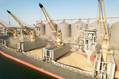
For example, a 35,000dwt handysize bulk carrier operating a 6000kW main engine for around 250 days per year could reduce annual fuel consumption by about 138t, equivalent to about US$142,968 per year at a VLSFO price of US$1036/mt.
A Panamax bulk carrier could reduce fuel consumption by about 266t per year, equivalent to US$275,576 per year on the same basis. For an 8,000 TEU container ship, annual fuel savings could exceed 1100t, or US$1,139,600 per year.
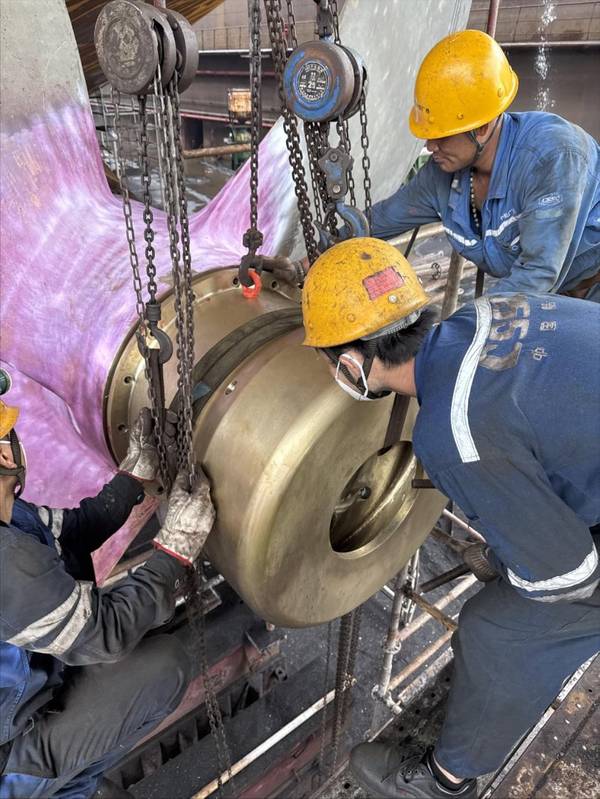
Eco Boss Cap is a CFD-optimized propeller boss cap developed to reduce hub vortex formation and associated losses, improving propulsive efficiency and helping operators reduce fuel consumption and emissions. EcoNavis’ core proposition is bespoke, vessel-specific optimization tailored to the vessel’s hull wake field, propeller design and rudder arrangement.
It is bespoke to the vessel and can typically be installed within a routine drydock work scope. Typical lead time from project start to delivery is around three to six months, driven mainly by optimization iterations, foundry scheduling and machining capacity.
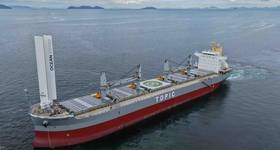
EcoNavis has completed its first commercial installation on the 177m general cargo vessel SFYC Araya, operated by Thailand-based Kaizen Ship Management. Early voyage monitoring from an initial installation indicates promising performance over 3% as reported by the fleet performance team.