
Maritime safety regulations are often shaped by hard lessons. Few accidents demonstrate this more clearly than the loss of the ferry MV Estonia in September 1994.
Maritime safety regulations are often shaped by hard lessons. Few accidents demonstrate this more clearly than the loss of the ferry MV Estonia in September 1994.
More than 30 years later, the incident is still a touchstone for passenger vessel safety. Many of the stability and survivability questions it raised are influencing how ferries are designed and how safety regulations evolve under the SOLAS Convention.
The tragedy unfolded in the early hours of 28 September as the ro-ro passenger ferry was making its overnight crossing from Tallinn to Stockholm through the Baltic Sea. Weather conditions had deteriorated overnight, with heavy seas and strong winds affecting the vessel. Shortly after 01:00, passengers and crew heard a loud metallic impact.
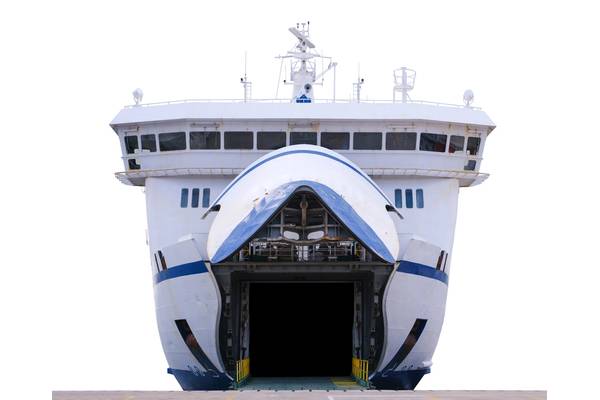
Water began entering through the bow visor and loading ramp, allowing seawater to flood the vehicle deck. Within minutes the vessel developed a severe list. Less than an hour after the first signs of trouble, Estonia had capsized and sunk.
Of the 989 passengers and crew on board, 852 lost their lives.
Beyond the scale of the loss of life, what shocked the maritime community the most was the speed of the accident. A large passenger ferry operating on a well-established route had become unstable and capsized far more quickly than many had anticipated.
For naval architects and regulators, the disaster marked a turning point. It exposed weaknesses in long-standing assumptions about ferry stability and forced a fundamental reassessment of how passenger ship safety should be evaluated.
When Theory Met Reality
At the time of the accident, ship stability was typically evaluated using relatively simplified models. Designers would analyse how a vessel behaved after flooding had occurred and the water inside the ship had reached equilibrium.
This approach provided a useful baseline for design, but it also relied on assumptions that did not always reflect how accidents develop in the real world. Ships rarely experience damage under calm, controlled conditions. They may already be rolling in waves, taking on additional water, or losing buoyancy in areas not intended to be submerged. The earliest stages of flooding can therefore be critical in determining whether a vessel remains stable or capsizes.
The loss of Estonia, together with earlier ferry disasters such as the Herald of Free Enterprise in 1987, highlighted how vulnerable ro-ro ferries could be once water entered large open vehicle decks. When water spreads across these spaces, the free surface effect can rapidly reduce stability.
In Estonia’s case, flooding of the vehicle deck combined with heavy seas and vessel motion to create a situation where stability deteriorated quickly and recovery became impossible. The disaster made clear that the maritime industry needed to reconsider how ferry survivability was evaluated.
Research and Regulation
The response to Estonia triggered one of the most significant research efforts ever undertaken in passenger ship safety. Across Europe, universities, classification societies, operators and regulators worked together to better understand the mechanisms behind rapid ferry capsizes and how ship design could be improved.
This ultimately led to the Stockholm Agreement in 1994, a regulatory framework retrospectively covering ro-ro passenger ferries operating in Northern Europe. The agreement required vessels to demonstrate that they could remain stable with water on the vehicle deck while operating in defined sea states.
Instead of relying only on calculations, regulators began asking a more practical question, could a ferry survive damage in real sea conditions? To answer it, engineers combined computer simulations with physical model tests, using scale models in wave basins to study how flooding developed and how vessels behaved when damaged.
These experiments helped naval architects better understand the interaction between flooding, wave motion and ship stability. They also provided practical insights into how vessel designs could be improved. In many cases, relatively modest modifications, such as additional buoyancy or adjustments to internal arrangements, significantly improved survivability.
The research carried out during this period did more than address a specific regulatory requirement. It reshaped the industry’s understanding of how passenger ships behave when damaged.
More than just Rules
The influence of accidents like Estonia have also been reflected in the evolution of international maritime regulation. The SOLAS Convention, first introduced following the sinking of the RMS Titanic in 1912, has been the cornerstone of global maritime safety standards. For more than 100 years, it has evolved as the industry learns from accidents and operational experience.
One of the most important changes has been a shift in how safety requirements are structured.
Historically, many SOLAS requirements were written in very specific terms. The rules described exactly what equipment should be installed or how certain safety features should be arranged. While this helped standardise safety across the industry, it left little room for different design solutions as passenger ships became larger and more complex.
Over time, regulators began to frame requirements differently. Instead of prescribing a single technical solution, the rules increasingly describe the safety objective that must be met.
This means designers have had greater freedom in how they achieve that objective. A regulation might state that a ship must prevent passengers from falling overboard or remain stable after certain types of damage, without dictating exactly how the design should deliver that result.
The shift may sound subtle, but it changed how naval architects approach passenger ship safety. The focus moves away from simply meeting a list of technical requirements and towards demonstrating that a vessel can manage the risks it may encounter.
In passenger ship design, this has encouraged a stronger emphasis on survivability. Ships are expected to remain stable and keep essential systems running long enough for passengers and crew to respond to an emergency. In many cases, the vessel itself is designed to provide that protection, effectively acting as its own first line of safety.
Lessons that Continue to Shape SOLAS
The process of learning from accidents and translating those lessons into regulation continues today.
New amendments to SOLAS that entered into force in January 2026 introduce updated requirements for lifting appliances carried on board ships, including cranes, davits, ramps and movable decks, while additional updates address container loss reporting and strengthen fire safety provisions for certain vessel types.
Although these amendments focus on specific technical areas, they reflect the broader way SOLAS continues to develop. The convention evolves gradually as experience from operations, investigations and engineering research is incorporated into the regulatory framework.
More than three decades after the loss of MV Estonia, the accident remains an important reference point in discussions about passenger ship safety. It demonstrated how quickly stability can be lost and how critical it is that regulations keep pace with the realities of ship design and operation.