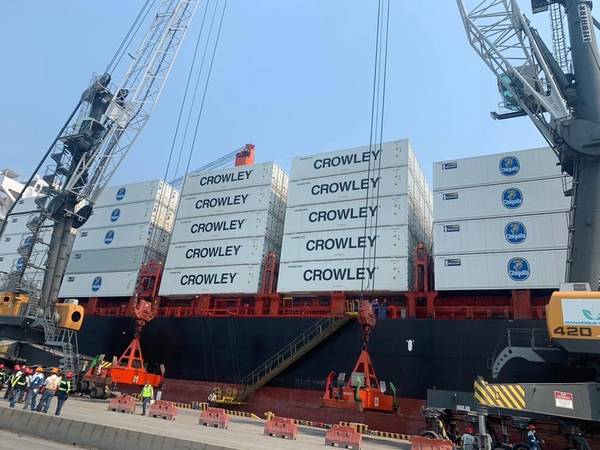
Crowley Logistics has added 222 new refrigerated (reefer) cargo containers to its industry-leading equipment fleet to ensure equipment availability at origin for perishables moving through the cold chain. These units are in addition to 300 new reefers received in January of this year.
The new units, which are all 40-foot-long high cubes, have wireless asset monitoring (WAM) technology, which provides continuous monitoring as the reefers transit from origin to destination, both at sea and over land.
“The acquisition of these containers is part of our continued commitment to provide the best equipment in the right quantities – all strategically positioned to meet customers’ needs during peak season and throughout the rest of the year,” said Steve Collar, senior vice president and general manager, Crowley Logistics.
The containers arrived in Santo Tomas, Guatemala, this month and are already being used in support of Central America’s continuing heavy northbound reefer season. The new containers are equipped with environmentally friendly Star Cool refrigeration units, incorporating several changes to further boost efficiency and reliability.
Since 2014, Crowley has invested roughly $160 million in new cargo equipment for its fleet.