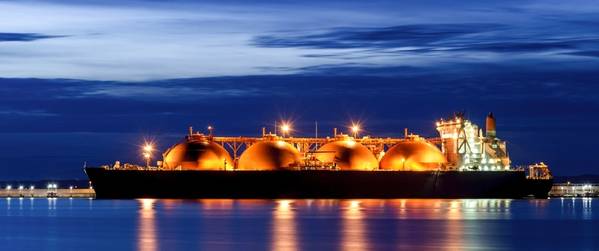
The Croatian government proposed a special law on Thursday to facilitate the construction of an EU-backed liquefied natural gas (LNG) terminal in the northern Adriatic.
The floating terminal is expected to start operations in 2020.
The European Union wants the facility to help diversify sources of supply and reduce dependence on Russian gas, most notably for countries in central Europe.
Brussels will invest 101.4 million euros ($121 million), or 28 percent of the project's assessed value.
The law, which will help untangle property issues and other factors, is planned to get parliamentary approval in an urgent procedure, but the project still faces opposition from local municipalities which have voiced concern about the terminal's environmental impact.
They have staged several protests and say they are considering legal action against the project. The energy and environment ministry say the project would not pose a significant threat to the environment.
The new law envisages construction of the terminal on the island of Krk in two stages, the first involving a floating terminal followed by a land-based facility.
"It is in Croatia's interest to ensure fast implementation of this project," the state secretary in the energy ministry, Mile Horvat, told a cabinet session. "The law, among other things, regulates property issues and concession fees to municipal authorities for using maritime domains."
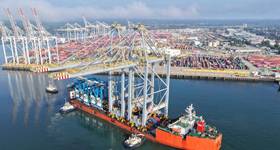
Croatia is currently running a tender for delivery of a floating storage and regasification unit (FSRU) for the planned terminal. An FSRU is a special type of ship where LNG brought in by tanker is converted back to gas to feed into the grid.
LNG Croatia, the company behind the project, is also preparing a second round of bidding for use of the terminal's capacity, which was initially planned at 2.6 billion cubic metres of gas a year. The final capacity of the floating terminal will depend on demand.
U.S. government officials have also expressed strong support for the LNG terminal and have said that U.S. energy companies are keen to be major suppliers for it.
($1 = 0.8417 euros)
(Reporting by Igor Ilic; Editing by Susan Fenton)