Cargill, one of the world's biggest charterers of ships, is working with technology partners to fit sails on vessels in its fleet to cut carbon emissions through harnessing wind power, the U.S. agribusiness group said on Wednesday.
About 90% of world trade is transported by sea and the International Maritime Organization (IMO) has said it aims to reduce overall greenhouse gas emissions from ships by 50% from 2008 levels by 2050.
Carbon emissions from shipping rose in the six-year period to 2018 and accounted for 2.9% of the world’s CO2, the latest IMO-commissioned study showed, adding pressure on the industry to bring levels down.
Commercial players have launched various initiatives aiming to speed up emissions cuts.
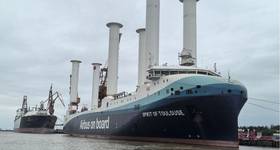
Cargill, whose chartered fleet of around 600 ships comprises dry bulk ships and tankers, said it had partnered with engineering specialists BAR Technologies and naval architect Deltamarin to develop wing sails that reach up to 45 metres in height, which will be fitted to the deck of vessels and can reduce CO2 emissions by up to 30%.
"Some voyages will be better suited to wind-assisted propulsion than others. This means that the engine will always be on, but at a lower than normal load,” said Jan Dieleman, president of Cargill’s Ocean Transportation business.
"This technology is helpful in our journey to zero carbon vessels," Dieleman told Reuters.
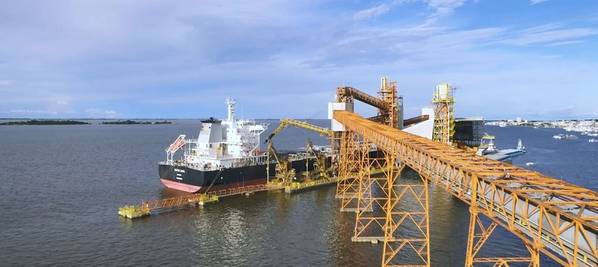
 (Photo: Cargill)
The project is in the design phase with first vessels expected on the water in 2022.
"We decided to start with MR (medium range) product tankers as the load and discharge operations present less issues for the sails," Dieleman said. "There are very few circumstances where the wing will slow the vessel down. There will be no cargo space lost."
(Reporting by Jonathan Saul; Editing by David Holmes)