Global trade in goods has strengthened from June despite geopolitical and policy-related uncertainties, the World Trade Organization said on Wednesday, signaling resilience in merchandise flows even as risks remain elevated.The September reading of the WTO's barometer tracking merchandise trade growth was 102, an improvement from the June barometer of 101.7, with growth remaining above trend.The WTO publishes its Goods Trade Barometer four times a year…

Chicago wheat futures jumped on Tuesday as hopes faded for a U.S. diplomatic effort to end the war in Ukraine, which has disrupted Black Sea grain shipments, analysts and traders said.Corn and soybean futures chopped up and down as traders adjusted positions ahead of Friday's U…

Russia hammered Ukrainian ports, industrial sites and retailers' distribution facilities with missiles and drones in an hours-long attack on Kyiv and other cities that was partly repelled, Ukrainian officials said on Thursday.Commuters went…

Attacks on shipping have shut down more than 97% of Russia and Ukraine's grain export capacity in the Azov and Black Sea basin, cutting off a major source of low-cost supplies and helping to drive up global prices.The two major grain exporters…

Companies from Africa, Europe, the US and Latin America offered strategies for steering through a challenging period of complex geopolitics, price volatility and supply chain congestion at a session of The Heavy Lift Group's (THLG) 74th Annual Conference…

Euronext wheat prices extended losses on Tuesday to the lowest level since mid-July as market rumours of talks to halt attacks on vessels in the Black Sea eased concerns about a squeeze on Russian and Ukrainian exports.Sluggish demand for Western European wheat…

Russian wheat export prices surged last week amid difficult shipping conditions in the Black Sea and a new wave of attacks in the Strait of Hormuz, analysts said on Monday.Forecasts for July wheat shipments from Russia continued to fall, even…

The Port of Antwerp-Bruges, against a backdrop of geopolitical tensions, trade conflicts, and operational disruptions, context handled 133.9 million tons of maritime goods in the first half of 2026, a decrease of 2.4% compared to the same period last year…

European wheat prices jumped 7% on Wednesday as escalating Black Sea attacks raised concerns over key grain export routes, with traders expecting some demand to shift to European Union supplies.Benchmark September milling wheat on Paris-based Euronext…

Container freight rates have continued to climb into July, with Drewry's World Container Index reaching $4,639 per forty-foot container on July 9, its highest level since September 2024, driven largely by rising rates on Asia-Europe trade routes…

The cost of shipping a container of goods from Asia to the United States has doubled since the start of the Iran war, driven by spiking fuel prices and an uptick in demand from importers who are worried costs will only rise further as the conflict wears on…
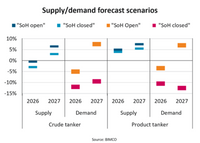
'The Strait of Hormuz has been effectively closed for three months, trapping hundreds of ships and thousands of seafarers in the Persian Gulf while significantly reducing global seaborne tanker volumes,” says Niels Rasmusssen, Chief Shipping Analyst at BIMCO…

U.S. import prices surged in April, with the cost of fuels posting the largest increase in four years, another indication that the U.S.-backed war with Iran was boosting inflation.Import prices increased 1.9% last month after an upwardly revised 0…
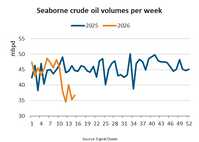
'Since the beginning of the Iran war, global seaborne crude oil shipments have fallen 16% compared to the first nine weeks of 2026, according to Signal Ocean data. This represents a reduction of 7.6 million barrels per day (mbdp) to 38.4 mbpd…

The International Chamber of Shipping (ICS) and the International Transport Workers’ Federation (ITF) have met representatives from Gulf States to address the ongoing conflict and its direct impact on seafarers and shipping in the Gulf.The meeting…