Venezuela's state-run oil company PDVSA has begun cutting crude production because it is running out of storage capacity due to an ongoing U.S. oil blockade that has reduced exports to zero, piling more pressure on an interim government trying to hang onto power in the face of U.S. threats of more military action.
Caracas is in political crisis under an interim government after President Nicolas Maduro and his wife were captured by U.S. forces on Saturday.
The OPEC country's oil exports, its main source of revenue, are now at a standstill following a U.S. blockade on tankers under sanctions and the seizure of two oil cargoes last month.
Chevron's cargoes bound for the U.S. had been an exception, continuing to move, because the company has a license from Washington for its operations. But even those have stopped since Thursday, shipping data showed on Sunday.
As part of his announcement of Maduro's detention and a government transition overseen by the U.S., President Donald Trump said on Saturday that an "oil embargo" on the country was in full force.
PDVSA's move includes shutting down oilfields or well clusters as onshore stocks mount and the company runs out of diluents to blend Venezuela's heavy crude for shipment.
The company requested output cuts to joint ventures including China National Petroleum Corporation's (CNPC) Petrolera Sinovensa, Chevron's Petropiar and Petroboscan and Petromonagas, the sources said. Petromangas, previously operated by PDVSA and Russian state-run Roszarubezhneft, is being run solely by PDVSA.
PDVSA and CNPC did not immediately reply to requests for comment. Chevron said on Sunday it continues to operate "in full compliance with all relevant laws and regulations," without providing details.
Workers at Sinovensa on Sunday were preparing to disconnect up to 10 well clusters at PDVSA's request, one of the sources said, after an over-accumulation of extra heavy crude and a diluents shortage. However, the wells could be quickly reconnected in the future, the person added.
A portion of Sinovensa's oil output is typically delivered to China as debt service payment. But two China-flagged supertankers that were approaching Venezuela to load oil stopped at the end of December, LSEG shipping data showed.
At Petromonagas, workers began reducing output late last week until diluent supplies through pipeline resume, another source said.
On its side, Chevron has not cut product output yet as it has some room to keep storing, particularly at Petropiar, and tankers have not stopped loading. However, its vessels have not left the country's waters since Thursday and storage capacity is limited at Petroboscan, which could ultimately lead to cuts, another source said.
DOMINO EFFECT
Even though its infrastructure was not targeted by U.S. strikes on the weekend, PDVSA is struggling to keep operations running amid the U.S. pressure. On top of the U.S. ship blockade and forced price discounts in consequence, the company has not fully recovered systems from a cyberattack in December, workers said.
Crude production cut backs, which could have a domino effect on other operations including refining and domestic fuel supply, are bad news for an interim government that will need revenue to remain in power and secure domestic stability.
Venezuela's oil minister Delcy Rodriguez, who is now Venezuela's interim president, said last month the country would continue producing and exporting oil despite the U.S. measures.
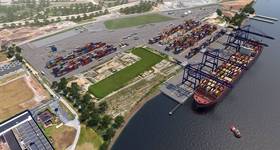
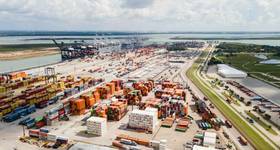
But the U.S. pressure has forced PDVSA to store oil in vessels since late December and slow down cargo deliveries at its main port, Jose. If loaded tankers cannot depart, company executives and experts view more output cuts as unavoidable.
No tankers were docked on Sunday at Jose to load either for export or domestic supply, according to TankerTrackers.com.
The company, which in the second half last year ramped up imports of much needed naphtha and light oil to dilute its extra heavy crude output, in December began having problems receiving cargoes from Russia amid the U.S. blockade.
Venezuela produced about 1.1 million barrels per day (bpd) of oil in November and exported 950,000 bpd that month, but the U.S. measures knocked shipments down to around 500,000 bpd last month, according to preliminary figures based on ship movements.
(Reuters - Reporting by Marianna Parraga and Reuters Staff; Editing by Julia Symmes-Cobb, Cynthia Osterman and Nick Zieminski)