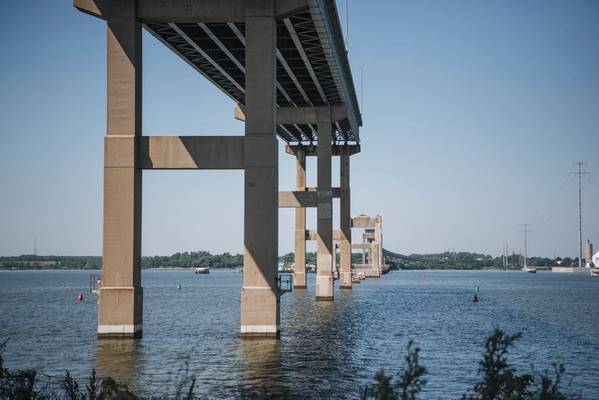
The U.S. Army Corps of Engineers (USACE) has issued a permit for the rebuilding of the Francis Scott Key Bridge, granting Maryland Transportation Authority permission to construct the bridge, following the collapse of the original structure that claimed the lives of six Baltimoreans.
The Baltimore District Regulatory Branch previously issued two permit verifications in 2024 for preliminary construction activities, explosive demolition, and removal of the remaining bridge structures and continues to participate in weekly interagency meetings on the project.
To remind, the 1.6-mile (2.57 km) long Francis Scott Key Bridge in Baltimore collapsed on March 26, 2024, after a container crashed into the structure.
“Less than one year after the catastrophic collapse of the Francis Scott Key Bridge, Baltimore District is proud to have provided fair and efficient permitting efforts to enable the construction of a new bridge,”
“To have both removed the bridge wreckage and issued relevant permits for its reconstruction on this timetable is a testament to our dedicated Regulatory Branch and our commitment to support an energetic economy across the Mid-Atlantic,” said Baltimore District Commander Col. Francis Pera.
Section 10 of the Rivers and Harbors Act of 1899 requires authorization from the Secretary of the Army, acting through USACE, for construction in or over any navigable water of the United States, including dredging or disposal of dredged materials, excavation, or any other modification.
This applies to all structures, from the smallest floating dock to the largest commercial undertaking. It also includes elements like dolphins, trestles, jetties, pilings, and aerial or subaqueous power transmission lines.
While the construction of the proposed bridge and structures will be performed over and adjacent to the Patapsco River’s Fort McHenry Federal Channel, the work is not anticipated to result in an alteration to the dimensions of the 700-foot-wide and 50-foot-deep channel.
Since 1917, the Baltimore District has been congressionally authorized to maintain the Baltimore Harbor and Channels federal navigation project, which includes the Fort McHenry channel, and will continue to do so throughout construction.
As currently designed, the bridge replacement will incorporate reinforced pier foundations, pier protection islands, and six dolphins, to permanently impact approximately 12.71 acres of the tidal Patapsco River.
A temporary trestle for construction access will also be built and involves the installation of approximately 1,200 36-inch steel piles, covering an above water area of approximately 400,000 square feet, and the top of pile will be located approximately 10 feet above the approximate mean high-water line of the Patapsco River.
In addition, approximately 300 36-inch temporary mooring or template piles will be installed in the Patapsco River. The trestle and template piles will temporarily impact approximately 9.19 acres of the Patapsco River.