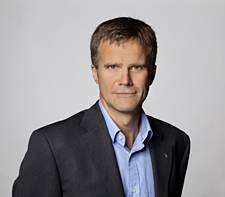
“There is a large potential for Germany to cut its climate emissions in a cost-effective way through the increased use of natural gas”, said Statoil CEO Helge Lund
Switching from coal to gas as the power sector is a significant opportunity to cut emissions. This alternative can save more than 50% of emissions per kilowatt-hour of electricity produced.
“I think it is both timely and necessary for German to develop a plan for how natural gas can contribute to fulfilling the ambitions of the Energiewende (energy transition). Increasing the use of natural gas will be beneficial both for the German economy and for the climate,” Lund said.
On June 24, the Statoil CEO addressed about 120 invited guests at a Berlin event—titled “Natural gas as a climate protection engine. Does Energiewende need a gas market strategy?” Some guests to attend include: members of the German Parliament, energy industry, business associations, think tanks and academia. The affair was co-hosted by Statoil and Wintershall, Germany’s largest crude oil and natural gas producer. Rainer Seele, Wintershall CEO, was in attendance to represent the company.
In attendance for the German government was, Uwe Beckmeyer, parliamentary state secretary at the Federal Ministry for Economic Affairs and Energy, and Stephan Steinlein, Federal Foreign Office state secretary.
A study on the potential of natural gas as a decarbonisation tool in Germany was presented by the Institute of Energy Economics at the University of Cologne. The study, which has analyzed economically efficient ways of mitigating CO2, reveals that natural gas is best positioned in the power and heating sectors.
Today around 45% of Germany’s power is generated by burning coal, while gas only contributes 10%. According to the study commissioned by Statoil and Wintershall, the coal-to-gas switch is virtually the only current option to cut power sector emissions.
Additionally, the study explains that natural gas can play a pivotal role in decarbonizing the heating sector. Emissions of 18 million tones of CO2 can be reduced at negative per ton of CO2, by simply replacing old and inefficient heating systems.
Lund underlined that a robust CO2 price is needed in driving cost-efficient emission reductions.
“This clearly demonstrates that in order for Germany to reach its 40% reduction target in 2020, gas needs to increase its share in the energy mix, and the use of coal needs to be strongly reduced,” said Lund.
He continued, “Through the process of establishing an EU energy and climate framework towards 2030, Germany should take the lead in ensuring that the EU emission trading scheme becomes Europe’s main tool for decarbonisation. In addition, I encourage Germany to design a plan for how increased use of natural gas can contribute in fulfilling the ambitions of the Energiewende,”