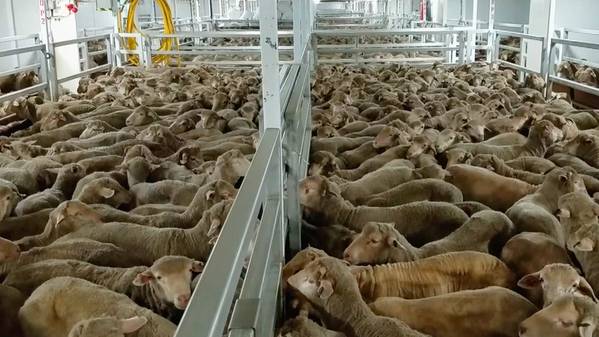
The South African Veterinary Association’s (SAVA) has released a formal position statement opposing the export of live animals by sea for slaughter at destination.
SAVA joins many other international veterinary associations in condemning this practice. SAVA’s statement draws on extensive peer-reviewed scientific research to conclude that the welfare of animals transported by sea is unavoidably compromised. It identifies a range of inherent harms, among them thermal stress, dangerous ammonia accumulation, the physical impact of ship motion, and risk of infectious disease. It makes a distinction that these are not incidental risks capable of being regulated away, but rather structural features of every shipment.
South Africa’s National Council of SPCAs (NSPCA) commends the position.
“We are deeply encouraged by SAVA’s statement,” says the NSPCA’s Consulting Veterinarian, Dr Bryce Marock. Marock has engaged with SAVA on this issue over an extended period and was invited by the World Veterinary Association, of which SAVA is a member, in 2024 to speak about the welfare problems encountered during the transportation of animals by sea.
“The science has always been clear. What has been missing is the weight of the veterinary profession speaking with one voice. That voice has now been raised, and it cannot be ignored.”
Other South African organizations have also made statements against the trade.
The issue is raised now particularly against the backdrop of the Draft Regulations for the Exportation of Live Animals by Sea, published by the Department of Agriculture in July 2025. The NSPCA has lodged a detailed submission in opposition to the draft regulations, which it regards as fundamentally inadequate.
The draft carries no criminal sanctions, no administrative fines, and no meaningful enforcement mechanisms.
It further fails to mandate an embargo on shipments to the Middle East during the hottest period of the year, when the risk of fatal heat stress is at its highest, and reduces critical safeguards to vague or voluntary provisions.