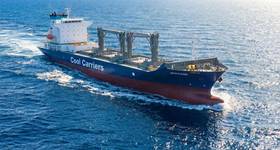
German shipping company Rhenus-Arkon-Shipinvest has placed orders for the first four environmentally-friendly vessels known as Hanse Eco Short Sea Coasters.
The short sea bulkers are expected to be delivered during the second half of 2021, with the construction work scheduled to begin in February 2020.
The vessels are based on the latest developments related to environmental protection, digitization and design.
The ‘Hanse Eco’ fleet is the result of an initiative launched by Torsten Westphal, one of the founding members of Arkon Shipping. Developing a future-oriented short sea fleet provides a sustainable solution for shipbuilding that is designed to meet specific needs – and this work is taking place with its partner Rhenus, the long-standing market and industry expert.
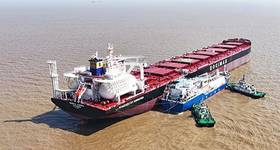
As a result, Rhenus-Arkon-Shipinvest has developed its own ship standard for European short sea traffic. The ‘Hanse-Eco’ vessel will be about 90 metres long and have a load-carrying capacity of 4,200 tonnes. The cargo hold will be able to accommodate more than 5,500 cubic meters of goods.
“Our ‘Hanse-Eco’ fleet is pointing the way forwards so that we can meet climate protection requirements and also make sensible use of the mega trend of digitization. We’re providing a high standard for European shipping 2.0 – from the planning stage until the vessels are put into service,” said Torsten Westphal, Managing Shareholder of Rhenus-Arkon-Shipinvest.
The ‘Hanse-Eco’ vessels have a number of optimized features compared to traditional designs: having the bridge at the front provides a clear view during deck loading procedures too and the innovative hull shape reduces fuel consumption.
An enlarged hold length also makes it possible to transport project loads as well as classic bulk and break bulk cargo. This type of vessel with its end-to-end deck is therefore ideally suited to handle large-volume and bulky goods and is able to serve new cargo segments with its “open-top” capability.
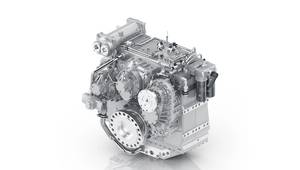
Alongside the water treatment systems, which will be mandatory from 2020 onwards, the eco-vessels are equipped with a hybrid ship’s propulsion system with an organic catalytic converter, support from an electrical motor and a waste gas after-treatment unit. This will not only meet the stipulations in the future IMO Tier III exhaust gas standard, but also significantly reduce emissions of carbon dioxide and particulate matter as well as fuel consumption. The main engine can also use organic fuel.
“An integrated automation system and using the latest camera technology simplify the operational processes on board and in ports and reduce the administrative work needing to be completed by captains,” Ralf Uebachs, Managing Director of Rhenus-Arkon-Shipinvest, added.