Japan's Kawasaki Heavy Industries (KHI) has delivered the Phoenix Gaia, an 82,200 m3 capacity liquefied petroleum gas (LPG) carrier, for Phoenix Tankers Pte. Ltd.
According to a press note from the shipbuilder, Phoenix Gaia is the 60th LPG carrier and the 11th vessel of the same type to be built by the company.
This vessel adopts Kawasaki's indegenously developed bow shape called SEA-Arrow, which significantly improves propulsion performance by minimizing bow wave resistance.
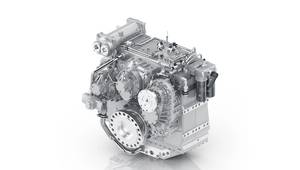
The release said that the main engine powering the vessel is an energy-efficient, electronically-controlled, ultra-long-stroke, two-stroke low-speed diesel engine.
In addition, the Kawasaki rudder bulb system with fins (RBS-F) and the semi-duct system with contra fins (SDS-F) contribute to reducing fuel consumption.
Four independent cargo tanks are installed in the cargo holds for carrying liquefied petroleum gas. The tanks are designed to provide optimal thermal insulation and absorb low-temperature contraction.
The cargo tanks are made with special cryogenic steel for loading LPG with a minimum temperature of –46°C. The tanks are wrapped in urethane foam for thermal insulation.
The vessel is designed to be able to navigate the newly expanded Panama Canal, which was completed in June 2016.