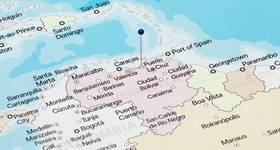
Venezuela's state-run oil company PDVSA on Wednesday was resuming oil cargo deliveries at its terminals following a cyberattack that affected its centralized administrative systems, according to the company and sources.
PDVSA, which is grappling with the U.S. announcement on Tuesday of a blockade of all sanctioned tankers approaching or planning to leave Venezuelan waters, was able to isolate oilfields, refineries, ports and other facilities from its central system to resume work, the sources close to operations said.
The state-run oil firm had detected a ransomware attack days ago, and the antivirus software it used to try to fix the problem affected its entire administrative system, according to a company source. In a ransomware attack, malicious software encrypts a victim's files or locks its computer, often causing severe disruptions.
Workers at terminals are now making a manual record of deliveries to avoid a longer suspension of exports, the sources said. PDVSA said in a statement on Wednesday that oil exports and imports were back to normal, and its tanker fleet was navigating without interruptions.
PDVSA's joint-venture partner Chevron was on Wednesday loading two crude cargoes bound for the U.S., according to one of the sources and shipping data.
It is unclear how U.S. President Donald Trump will impose his announced blockade against sanctioned vessels, and whether he will turn to the U.S. Coast Guard to interdict vessels. The U.S. last week seized a supertanker near Venezuela.
The Trump administration has moved thousands of troops and nearly a dozen warships to the region.
Venezuela rejected Trump's "grotesque threat" in a statement later on Tuesday night, saying he was violating international law, free commerce and the right of free navigation.
The South American country's ambassador to the United Nations will denounce Trump's threat there, according to the statement, which was shared by Vice President Delcy Rodriguez, who is also Venezuela's oil minister.
EXPORTS DRY UP
Since the U.S. seized the large crude carrier Skipper last week, only Chevron-chartered tankers, which operate under U.S. authorization, have set sail without delays.
An unsanctioned supertanker set sail this week in "dark mode," or with its signal off, carrying 1.8 million barrels of heavy crude after waiting for days to leave, according to a PDVSA internal document and monitoring data.
More than 9 million barrels of Venezuelan oil remain stuck in vessels in Venezuelan waters, while customers and shippers demand price discounts and contract changes from PDVSA, traders and a company source said this week.
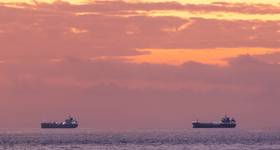
At least half a dozen tankers have turned around since last week to avoid approaching the Caribbean Sea, which is heavily patrolled by U.S. vessels, according to data on the TankerTrackers.com site.
The rising U.S.-Venezuela tensions also have affected the South American country's imports of heavy naphtha, which are needed to dilute its extra-heavy oil output. Most tankers carrying Russian naphtha for Venezuela have arrived and discharged since last month, but others have turned back, the data showed.
(Reuters)