For decades, cargo criminals followed a familiar playbook: steal consumer electronics, cigarettes, pharmaceuticals or luxury goods. These products were easy to fence and commanded healthy profits. But according to the latest BSI Consulting and TT Club 2025 Cargo Theft Report, the economics of cargo theft are changing rapidly—and nowhere is that more evident than copper. The report reads less like a crime summary and more like a lesson in commodity markets. Criminal organizations are no longer simply stealing what is valuable today; they're stealing what global supply chains will desperately need tomorrow. Here are the numbers that matter.
18X
The increase in reported copper theft incidents between 2016 and 2025.
If there is one statistic that jumps off the page, this is it. Copper theft incidents have increased eighteenfold over the last decade, transforming what was once considered a niche crime into one of the fastest-growing cargo security threats worldwide. Even more alarming, the value of associated insurance claims has increased twenty-fivefold during the same period. That's hardly surprising. Copper now sits at the center of virtually every major industrial trend—from electrification and renewable energy to electric vehicles, data centers and transmission infrastructure. Elevated prices, constrained global supply and long-term demand growth have combined to make copper irresistible to organized theft rings.
25X
The growth in copper theft claim values.
Criminals aren't simply stealing more copper. They're stealing higher-value cargo, targeting larger shipments and exploiting increasingly sophisticated logistics operations. Theft now extends well beyond finished products to include copper coils, cable, cathodes, scrap metal and semi-finished materials stored in terminals, warehouses, manufacturing plants and rail yards or moving by truck and rail. The lesson is straightforward: when commodity prices rise, theft risk follows.
22%
Global cargo thefts involving insiders.
Perhaps the most troubling statistic in the report isn't about organized crime at all.
Nearly one-quarter of all cargo theft incidents worldwide involved insider participation. These aren't Hollywood-style warehouse heists. They're often incremental thefts carried out over weeks or months by employees, contractors or trusted partners who understand inventory systems and security weaknesses. The report points specifically to India, China, Brazil, the United States and Indonesia as countries where insider-enabled theft remains particularly significant, frequently fueled by weak inventory controls and corrupt labor practices. Technology may be improving cargo visibility, but poor internal controls continue to create opportunities for theft.
70%
Cargo thefts occurring from trucks.
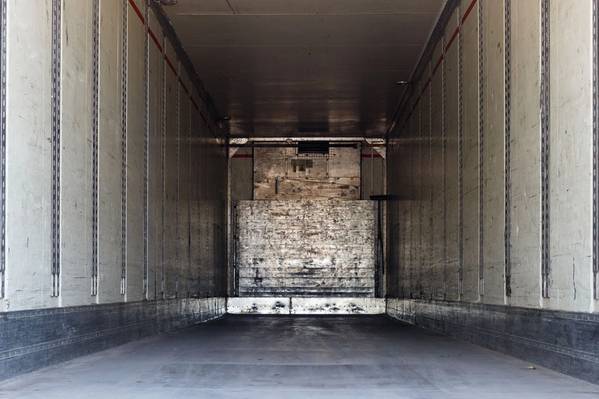
Despite increasing attention on ports, terminals and intermodal operations, the truck remains the weakest link in the cargo chain. Seven out of every ten reported cargo thefts globally occurred while freight was moving by truck. Facilities accounted for another 20%, while sea transport represented only 4% of reported incidents. That's an important reminder for maritime operators. A container may arrive safely aboard ship, but once it leaves the terminal, its greatest exposure often begins.
Brazil: 22%
The world's cargo theft hotspot.
Brazil accounted for the largest share of recorded cargo theft incidents globally in 2025, followed by Mexico (15%), the United States (13%) and India (11%). Organized criminal groups continue to dominate theft activity throughout Latin America, employing hijackings, document fraud, GPS manipulation and increasingly sophisticated logistics intelligence. Meanwhile, Ecuador nearly doubled reported theft incidents as organized gangs competed for control of narcotics trafficking corridors.
85%
Increase in Asian piracy incidents.
While large-scale cargo theft aboard ships remains comparatively uncommon, maritime crime is hardly disappearing. Across Asia, piracy incidents increased 85% during the first half of 2025, reaching their highest levels in nearly a decade. The Strait of Malacca and Singapore alone experienced a staggering 281% year-over-year increase. Fortunately, most incidents involved theft of ship's stores, engine parts and unsecured equipment rather than entire cargoes.
One (1) Big Lesson
Perhaps the report's biggest takeaway is philosophical rather than statistical. Cargo risk is no longer static.
Historically, shippers built security programs around historical loss experience. But BSI Consulting and TT Club argue that approach no longer works. Criminal organizations increasingly behave like commodity traders, continuously evaluating which products offer the greatest combination of value, liquidity and ease of resale. Goods that were considered relatively low-risk one year can become prime targets the next as supply shortages, export controls or geopolitical pressures reshape global markets.
That means cargo security must become just as dynamic. Security investments should adjust as commodity values change. Inventory reconciliation, access control, physical security, routing decisions, parking practices and carrier oversight all need to evolve alongside market conditions, not years afterward.