The Moroccan government has agreed to sell a 35% stake in terminal operator Marsa Maroc to Groupe Tanger Med, raising 5.48 billion dirhams ($610 mln) for state coffers, Marsa Maroc said on Tuesday.
The government will retain 25% of the capital and voting rights in Marsa Maroc, a Casablanca-listed company that manages terminals at 9 Moroccan ports, the statement said, without providing further details.
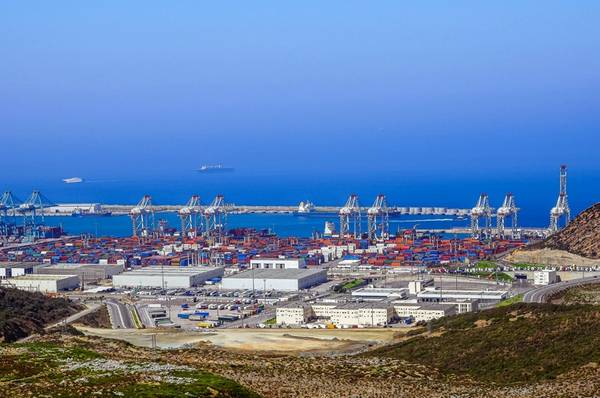
Tanger Med manages a container and passenger port as well as 2000 hectares dedicated to industry and logistics linked to the port.
Tanger Med port, the main export hub for Morocco's automotive industry, is the largest in Africa and in 2020 it outperformed Mediterranean rivals by handling 5.8 million containers.
The sale is part of efforts to overhaul state-owned enterprises announced to improve performance and cut the fiscal deficit estimated this year at 6.3%, down from 7.6% last year.
Morocco's finance minister told Reuters on July 14 that the government aims to increase tax revenues to better finance public policies and cut the fiscal deficit after the COVID-19 pandemic caused a surge in spending.
(Reporting by Ahmed Eljechtimi, Editing by Louise Heavens)