Migrant Rescue Draws Budget Concerns in the Mediterranean
By Michelle Howard
November 25, 2014
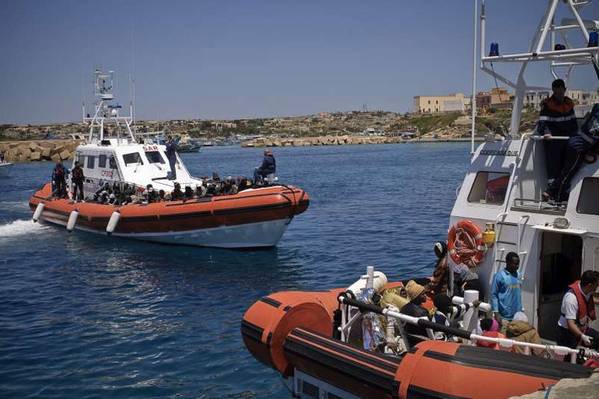
Italian coastguard vessels rescue people on the Mediterranean (Photo: United Nations)
Seafarers’ Rights International (SRI) has raised concerns about the implications for masters of the recent reports of the launch of the new EU Frontex operation Triton which will apparently have a reduced budget and focus on border control in place of the Italian Mare Nostrum that is credited with saving more than 150,000 migrants in the Mediterranean.
Deirdre Fitzpatrick, Executive Director of Seafarers’ Rights International (SRI) said, “The commendable practice of merchant ships of the world rendering assistance to persons in distress at sea was enshrined in the Safety of Life at Sea Convention (SOLAS Convention) 1914 which was enacted in direct response to the Titanic disaster. Since that time, the SOLAS Convention in its successive forms has obligated masters to provide assistance to distressed persons, irrespective of their nationality or status or the circumstances in which they are found. The obligation is enshrined in the United Nations Law of the Sea Convention 1982, as well as in the international Salvage Convention of 1989.”
“This is a serious obligation on masters and under many national laws, the master who fails to render assistance to any person in danger of being lost at sea could face prosecution, and on conviction, a jail sentence. However, a master must be equally cognisant of his duty to protect the lives of his own crew and passengers and not to expose them to risks including risks of infection such as Ebola that may arise when he rescues people at sea.”
In his opening address to the Maritime Safety Committee on November 17, 2014, the Secretary General of the IMO said that figures that he had seen suggest that, so far this year, more than 600 merchant ships diverted from their routes to rescue persons at sea. These deviations are detrimental to shipping and are not offset by any realistic prospects of salvage awards.
The obligation of masters to render assistance to persons in danger of being lost at sea can be seen alongside the obligation of governments to ensure that assistance be provided to any person in distress at sea. Under the 1979 International Convention on Maritime Search and Rescue governments must “ensure that necessary arrangements are made for the provision of adequate search and rescue services for persons in distress at sea round their coast.” Any reduction in search and rescue by governments may increase the number of incidents to which merchant ships have to respond, with consequent burdens and legal responsibilities on masters and crews.
Brian Orrell OBE, Chairman of the Advisory Board of SRI said, “The obligation of masters to assist persons in distress at sea is steeped in maritime tradition and legal history. It is therefore of concern if budgets for search and rescue in the Mediterranean are being reduced. This may increase the number of search and rescue missions that masters have to undertake, as well as their risks of criminal prosecution for any perceived failure to attend to persons endangered at sea.”