MARAD Publishes US ATB, ITB Database
Posted by Eric Haun
December 19, 2014
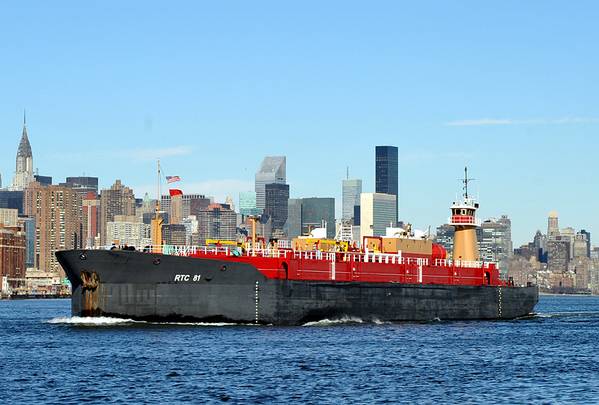
ATB Dace Reinauer (Photo: Reinauer)
The U.S. Maritime Administration (MARAD) released what it is calling a first-of-its-kind public database that chronicles U.S.-flagged, privately owned domestic articulated tug-barge (ATB) and integrated tug-barge (ITB) vessels.
In the report, MARAD has catalogued more than 130 tug-barge units in service with a carrying capacity of 15.2 million barrels. The intention of this report is to calculate and illustrate the scale and scope of this segment of the maritime industry.
According to MARAD, the U.S. leads the world in the number of ATBs operated, which provide a cost-competitive alternative to tankers in the domestic energy market. Unlike a typical tug and barge combination, an ATB/ITB is mechanically linked, combining the economics of tug and barge operations with the speed, maneuverability, sea-keeping capability and heavy weather-reliability similar to that of a self-propelled tanker. ATBs can also be built in less time than conventional tankers, and offer improved operating efficiencies at a lower capital cost.
The database can be viewed on the MARAD website: marad.dot.gov.