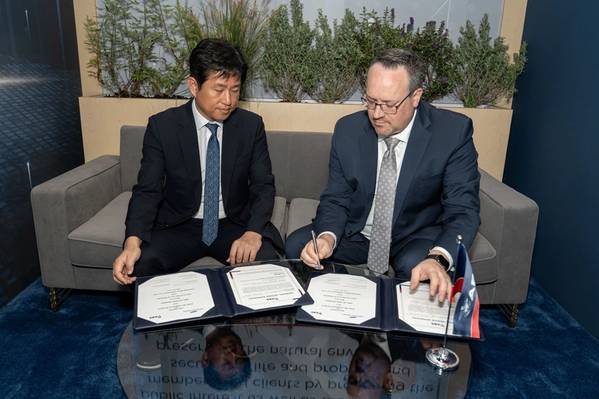
ABS issued general design approval (GDA) to Samsung Heavy Industries Co., LTD. (SHI) for its detailed design of a liquefied hydrogen carrier, a 20,000 cbm vessel with Type C tanks.
“Hydrogen is a key enabler of the clean energy economy. In decarbonizing different industry sectors, hydrogen plays critical roles as a fuel, feedstock, energy storage and load balancing. As the demand for hydrogen grows, vessels like the design from SHI will be critical for its transportation and development of the hydrogen value chain,” said Gareth Burton, ABS Senior Vice President, Global Engineering.
“Through this joint development project, SHI secured a detailed design for a liquefied hydrogen cargo containment system and cargo handling system. SHI plans to prepare for commercialization of liquefied hydrogen carriers following a mock-up verification,” said Ho-Ki Lee, SHI Vice President, Green Energy Technology Center.
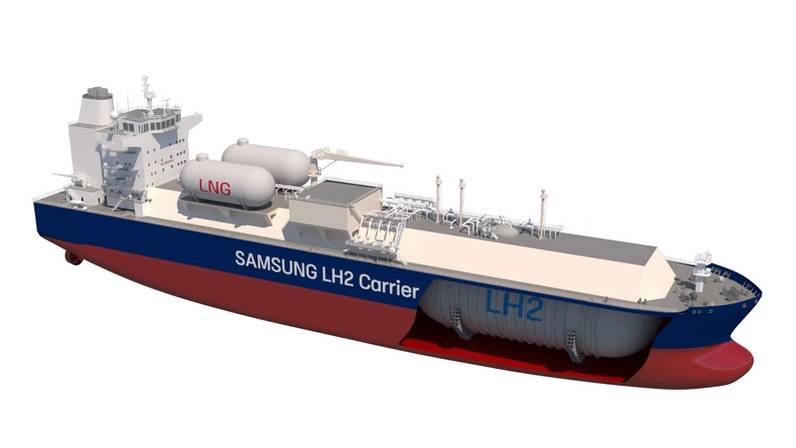 Rendering courtesy of Samsung Heavy Industries Co., LTD.