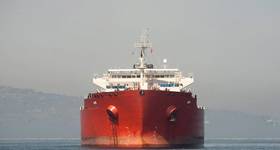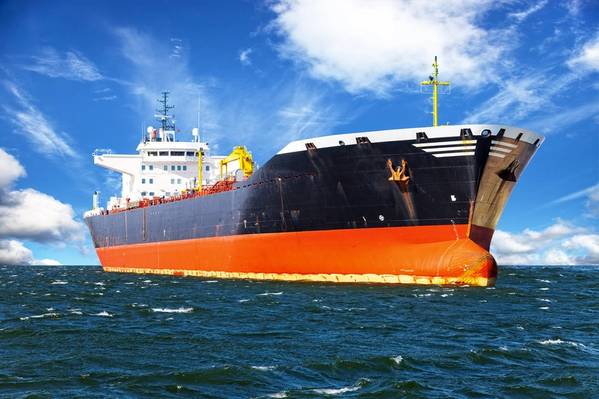
Oil companies aiming to participate in new exports of Venezuelan crude to the U.S. following the ouster of President Nicolas Maduro are in hasty discussions to find tankers and put together operations to transfer the crude safely from vessels and dilapidated Venezuelan ports, four sources familiar with the operations said.
Trading houses and oil companies, including Chevron, Vitol and Trafigura, are competing for U.S. government deals to export crude from Venezuela, sources said, after President Donald Trump said that Venezuela is set to turn over as much as 50 million barrels of sanctioned oil to the United States.
Trafigura said in a meeting with the White House on Friday that its first vessel should load in the next week.
Faced with a U.S. blockade in recent months, Venezuela has been storing oil in tankers and has nearly completely filled storage tanks onshore.
The vessels holding the oil are old, poorly maintained, and under sanctions. Other vessels cannot make direct contact with sanctioned ships due to liability and insurance requirements, even if the U.S. grants licenses, the sources said.
Onshore tanks have also not been maintained for years, posing risks for parties trying to load the oil.
Shipping companies Maersk Tankers and American Eagle Tankers are among the firms looking to expand their ship-to-ship transfer operations in Venezuela, three of the sources said.
Maersk Tankers could replicate the ship-to-shore-to-ship logistics it has used before in Amuay Bay in Venezuela, one source said. Maersk already has operations in nearby Aruba and Curacao, islands whose waters are often used to transfer Venezuelan oil. However, while the transfers are possible in Aruba and U.S. ports, they are more expensive.
"With 17 employees in the country, Maersk's presence in Venezuela is limited. All employees are safe and accounted for, and there are currently no changes to our ocean services. Operations continue, with only minor delays at this stage, and we continue to monitor the situation closely," the company said in a statement.
Transfer operations will also be complicated by a shortage of smaller ships to move oil from the storage vessels to piers from where the oil can be transferred to another ship, as well as inadequate maintenance of machinery and equipment, another shipping source said.
AET, which already helps transfer Chevron's shipments of Venezuelan crude to the U.S., is being approached by potential clients to expand its capacity in that area, two of the sources said.
AET and Chevron did not immediately respond to requests for comment.
While supply could reach the 500,000 barrels per day Venezuela previously exported to the U.S. before sanctions and would drain accumulated inventories in 90-120 days, it will be difficult to meet that goal if oil must be taken from both tankers and onshore storage, the sources said.
Companies are also competing fiercely for loading slots at Venezuela's main Jose oil terminal, where there are capacity and speed limitations.
Chevron, a key joint venture partner in the country, is also aggressively vying to keep its privileged position at Venezuela's terminals, while lining up its vessel fleet, one source said.
Oil companies, including Chevron, Vitol, Trafigura, are already sourcing supplies of much-needed naphtha, an industry source in Venezuela said.
The naphtha is typically blended into the heavy Venezuelan crude to lower its density, and make it easier to transport and process at refineries.
SIX TANKERS RETURN
At least six oil tankers, most of them loaded, that had departed Venezuela in early January in 'dark mode' - or with their transponders off amid a strict U.S. blockade - are now back in the South American country's waters, according to state company PDVSA and monitoring service TankerTrackers.com.
A flotilla of about a dozen loaded vessels and at least three other empty ships left Venezuelan waters last month in apparent defiance of an embargo imposed by U.S. President Donald Trump since mid-December, which has dragged down the country's oil exports to minimum.
One of the ships, the Panama-flagged supertanker M Sophia, was intercepted and seized by U.S. forces this week when returning to Venezuela and sent to U.S. waters; while another, the Aframax tanker Olina with a flag from Sao Tome and Principe, was intercepted but released to Venezuela on Friday, state company PDVSA said.
Five more of the vessels that had departed in that flotilla, Panama-flagged Merope, Cook Islands-flagged Min Hang, Panama-flagged Thalia III, Guyana-flagged Vesna and Palau-flagged Nayara, were spotted by Tankertrackers.com in Venezuelan waters between Friday and Saturday through satellite images.
U.S. authorities had said on Friday that Olina - previously known as Minerva M - would be freed.
The next step for the country, which remains under strict U.S. supervision after it captured and extracted President Nicolas Maduro last week, would be the beginning of organized crude exports as part of a $2 billion oil supply deal Caracas and Washington are negotiating, they said.
In a meeting with top oil company executives on Friday, U.S. President Donald Trump said arrangements for the supply had progressed. Global trading houses Vitol and Trafigura received this week the first U.S. licenses to negotiate and carry Venezuela's crude exports, and to provide naphtha to the OPEC country, sources said.
The first naphtha cargo from the deal, to be supplied by Vitol, is expected to arrive in Venezuela next week, sources said on Saturday.
(Reuters)