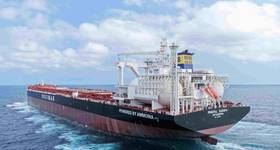
Diana Shipping announced that it has received a notice of cancellation of the Memorandum of Agreement (MoA), between a separate wholly-owned subsidiary and an unaffiliated third party, to sell the 2005-built Panamax vessel “Calipso”, as previously announced.
The global shipping company specializing in the ownership of dry bulk vessels said in a press note that the buyers elected to exercise their right to cancel the Contract as a result of vessel’s missing the cancelling date stipulated therein, due to unforeseen events, unrelated to the condition of the vessel, and have requested the refund of the deposit of the purchase price held in joint escrow account by the deposit holder.
Diana Shipping has taken steps to release the deposit to the buyers, it said.
Upon completion of the previously announced sale of one Capesize dry bulk vessel, the m/v Norfolk, Diana Shipping Inc.’s fleet will consist of 41 dry bulk vessels (4 Newcastlemax, 13 Capesize, 5 Post-Panamax, 5 Kamsarmax and 14 Panamax).
As of today, the combined carrying capacity of the company’s fleet, including the m/v Norfolk, is approximately 5.2 million dwt with a weighted average age of 9.66 years.