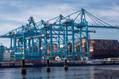
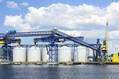
Colombia's government said on Tuesday it has reached a deal with community leaders in the Pacific port city of Buenaventura to lift a 21-day civil protest that halted exports of coffee and other goods.
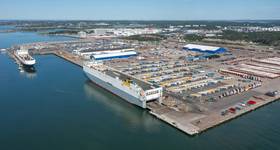
Residents demanded more funding for the violent and poverty-stricken city, which has a population of about 415,000 people, many of whom lack basic public services. Protesters held large marches and blocked roads into the city and its five ports, stranding truck drivers and causing shortages of foodstuffs.
Under the deal, President Juan Manuel Santos' government will ask Congress to urgently approve a 10-year development plan for Buenaventura. The plan will be funded by 50 percent of the taxes paid by businesses at the ports and $76 million in outside credit, the government said in a statement.
The government will also spend 1.5 trillion pesos, about $518 million, in public infrastructure projects in the area during the 14 months that remain of Santos' term.
"The law will establish the projects and programs, as well as their financing sources, to reach complete compliance with the economic, social and cultural rights of the residents of the district of Buenaventura," the government said.
Also included in the deal are promises to improve healthcare provision and ensure that all residents have running water 24 hours a day. Protest leaders, along with the governor of Valle del Cauca province and Buenaventura's mayor, will help write the proposed law.
"I do want to underline that the government of President Juan Manuel Santos has been the government which has invested most in Buenaventura in history, but even so the national government is willing to commit additional resources to improve public services," Interior Minister Guillermo Rivera, who participated in the 40 hours of negotiations, told journalists.
Transport officials said the strike held up some 309,000 tonnes of cargo along with 33,635 shipping containers. Thirteen ships, containing another 249,432 tonnes, were parked at the ports. Officials have said the protest caused tens of millions of dollars in losses for the ports and local service providers like hotels and restaurants.
It was unclear when each of the ports would once again be operating normally, but officials have said it could take as long as two weeks to clear waiting cargo.
Coffee exporters were able to re-route some shipments to Caribbean ports at an extra cost, but the closures added to delays already caused by heavy rains.
The Andean country is the top grower of high-quality arabica.
(Reporting by Julia Symmes Cobb and Luis Jaime Acosta)