DASSAI and Mitsubishi Heavy Industries report a successful completion of the first mission of the "DASSAI MOON Project", an initiative aimed at producing sake on the surface of the Moon.
In this mission, specialized brewing equipment jointly developed by DASSAI and Mitsubishi Heavy Industries, along with sake raw materials, were launched to the International Space Station (ISS).
The experiment took place within JAXA's experimental facilities aboard the Japanese experiment module "Kibo," where conditions mimicking lunar gravity were established.
Under these conditions, the alcoholic fermentation process of sake was successfully confirmed for the first time in human history.
Following fermentation aboard "Kibo," the mash was returned to Earth and subsequently refined into sake at DASSAI's headquarters brewery in March of this year.
Achievement of the first human sake brewing outside the Earth: Analysis of the mash obtained from the brewing test conducted aboard "Kibo" confirmed that the alcohol content reached 12%.
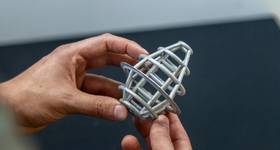
 Brewing equipment returned from the ISScompleted space brewing sake. Image courtesy Dassai
This result demonstrates experimentally that sake production is feasible even under lunar-gravity conditions using a process comparable to that on Earth. At the same time, orbital data showed that fermentation progressed more slowly than under terrestrial conditions, suggesting that differences in gravity may influence the rate of fermentation.
Development of Space Brewing Equipment: The sake brewing equipment developed and manufactured by MHI operated effectively in the simulated lunar-gravity environment. The stirring mechanism of the brewing equipment supported the fermentation of the samples, while a set of sensors continuously measured temperature and alcohol concentration.
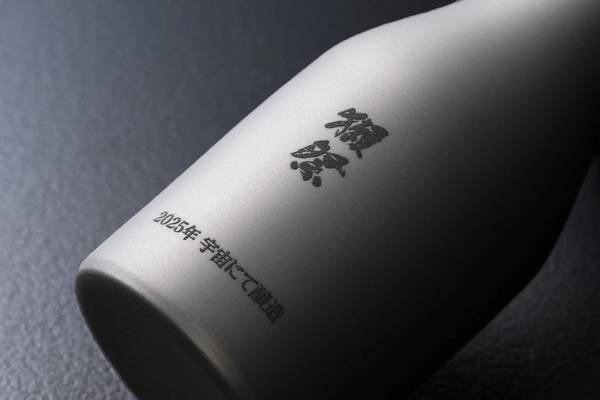
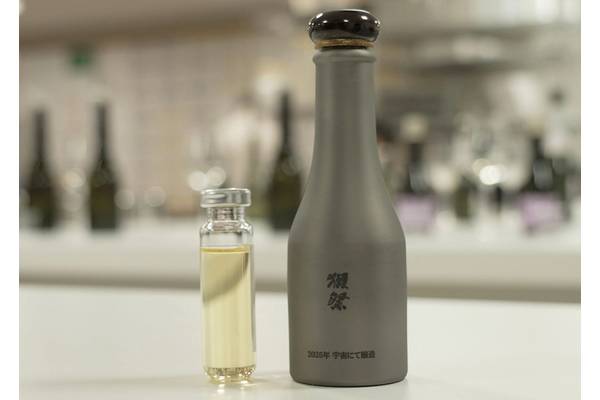
Approximately 260g of space-brewed mash returned to Earth were pressed at DASSAI's headquarters brewery, yielding 116ml of sake. Of this, 100ml was packaged in titanium bottles and released by DASSAI at a price of 110 million yen (tax included) as a symbolic expression of challenge.
Proceeds from the sales will be donated to support Japan's space development efforts.
Application of fermentation technology in the space industry in the future: The sake lees obtained from this mission will undergo detailed compositional analysis in collaboration with the Higashitani Laboratory at Tohoku University. This research aims to verify potential genetic changes in yeast under space conditions and to identify differences between fermentation in space and on Earth. The findings are expected to contribute to the future development of the space industry.
The "DASSAI MOON Project" is an initiative aimed at establishing sake breweries on the Moon and brewing DASSAI there, with the long-term goal of enhancing quality of life in a future lunar environment.