BWTS Fitting on Japanese VLCC a First

January 11, 2013

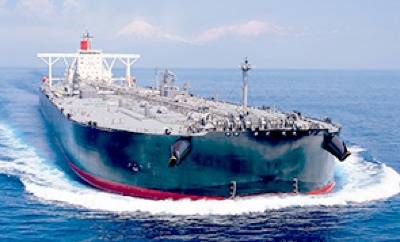
MOL VLCC: Image credit MOL

Mitsui O.S.K. Lines, Ltd. (MOL) plan to install a ballast water treatment system on an in-service very large crude oil carrier (VLCC).

This will be the first such onboard system installed by any Japanese shipowner on an existing VLCC. The company chose the JFE Ballast Ace system developed by JFE Engineering Corporation. The installation will take place while the vessel is docked from March through April.

Ballast water discharged while loading/discharging cargo carries marine organisms around the world and can have a negative impact on marine ecosystems and biodiversity. This has become a subject of global concern since the late 1980s. Accordingly, the International Maritime Organization (IMO) adopted the Ballast Water Management Convention in February 2004, and its ratification is under way.

Ship details:

  • Type of vessel: Very large crude oil carrier (VLCC)
  • 
Ship registry/class: Marshall Islands/Nippon Kaiji Kyokai (ClassNK)

  • Deadweight tons: About 300,000 tons
  • 
Length: 333m

  • Breadth: 60m

The treatment capacity of the BWTS is 3,500m³/h x 2 units (explosion-proof), and the treatment method is of filters with chemical injection.



 

Logistics News

AAPA Supports House Appropriations Bill with $538m for Port Infrastructure

AAPA Supports House Appropriations Bill with $538m for Port Infrastructure

US Grain, Soy Futures Drop After US-China Talks

US Grain, Soy Futures Drop After US-China Talks

Dassault Systèmes, iHawk Deploy Virtual Twin Technology for Autonomous Cargo Operations

Dassault Systèmes, iHawk Deploy Virtual Twin Technology for Autonomous Cargo Operations

DNV Launches Hydrogen Fuel Recommended Practice

DNV Launches Hydrogen Fuel Recommended Practice

Subscribe for Maritime Logistics Professional E‑News

Russian diesel cargo drifting near Chile for two months, data shows
Special Report-Iran consolidates control of Hormuz through island checkpoints and diplomatic deals, as well as sometimes 'fees.'
The US waiver is unlikely to increase Russian oil exports, which are already at near capacity.