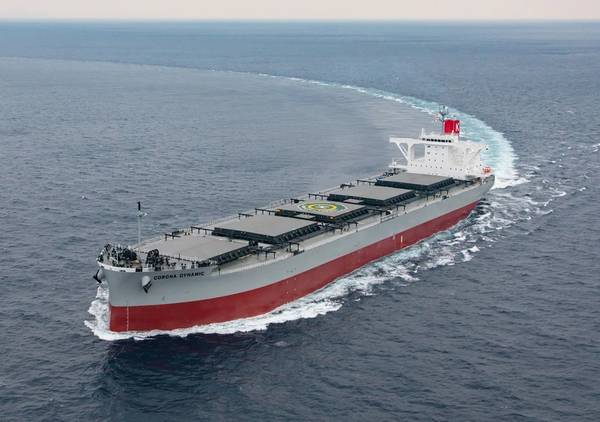
The Baltic Exchange's main sea freight index, which tracks rates for ships ferrying dry bulk commodities, fell to a one-week low on Wednesday, on weaker demand for all vessel segments.
The Baltic index, which reflects rates for capesize, panamax and supramax vessels, was down 1 point at 1,897, extending losses to a fourth session.
The capesize index fell 10 points, or 0.3%, to 3,194. The average daily earnings for capesizes, which typically transport 170,000-180,000 tonne cargoes such as iron ore and coal, rose $174 to $25,838.
Separately, China's top steelmaking city of Tangshan, in Hebei province, has issued a second-level smog alert on Tuesday that requires steel mills to limit certain operations.
The panamax index declined 30 points, or 1.6%, to 1,888, recordings its worst day this month. Average daily earnings for panamaxes, which usually carry coal or grain cargoes of about 60,000 tonne to 70,000 tonne, dropped $244 to $15,132.
The supramax index nudged lower by a point to 1,226.
Reporting by Nakul Iyer