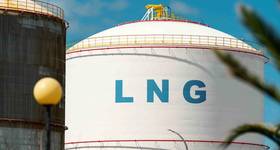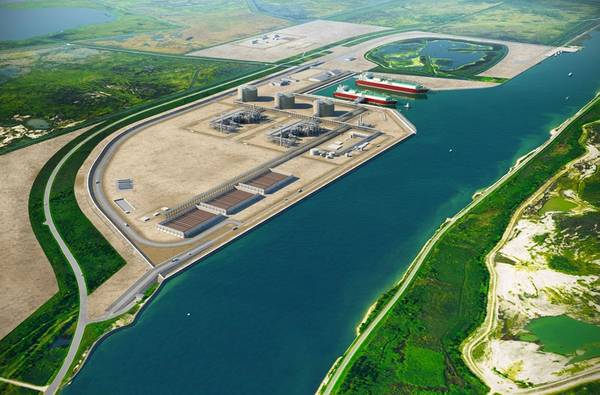
A U.S. court has removed an emissions permit for Sempra's Port Arthur LNG export terminal in Texas, potentially halting construction of the facility.
In its decision, the U.S. Court of Appeals for the Fifth Circuit on Tuesday found that the Texas Commission on Environmental Quality (TCEQ) failed to impose the same emissions limits on the Port Arthur plant as on other projects, including the Rio Grande LNG project which is now under construction.
The approximately 13.5 million-metric-tons-per-annum (mtpa) Port Arthur plant has approval to export LNG to both Free Trade Agreement (FTA) and non-FTA countries, including in Europe.
"The Commission is not forever bound to the emissions limits that it set for Rio Grande LNG for all subsequent permits ... But in making those individualized determinations, the Commission must demonstrate that it is treating permit applications consistently" the court held.
The decision sends the Port Arthur LNG permit application back to the TCEQ for new evaluation.
Sempra Infrastructure retains a 28% indirect stake in the plant's Phase 1, while oil and gas company ConocoPhillips COP.N owns 30%. Investment firm KKR KKR.N owns a 20% stake in Sempra Infrastructure while Sempra Energy owns 70% and Abu Dhabi Investment Authority owns 10%.
Sempra Energy did not immediately respond to a request for comment.
John Beard, executive director of the Port Arthur Community Action Network, which brought the lawsuit challenging TCEQ, said of the ruling: “We’ve won by standing up for Port Arthur communities of color to breathe free from toxic pollution. When attacked, we fight back – and win!”
The court's decision is in keeping with increased pressure being placed on regulators and the Biden administration to limit the expansion of LNG projects in the US, said Alex Munton, director of Global Gas & LNG Research at Rapidan Energy Group.
"This creates additional risk, that are already high due to the difficulties the industry faces from building several large scale projects at the same time," Munton said.
The increased environmental pressure could potentially lead to fewer projects being built in the U.S. as well as global price instability in the long run if demand continues to grow without U.S. expansion of production of the superchilled gas, he said.
(Reuters - Reporting by Curtis Williams in HoustonEditing by Franklin Paul, Matthew Lewis and Deepa Babington)