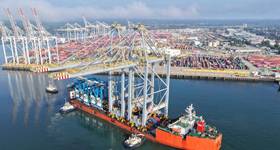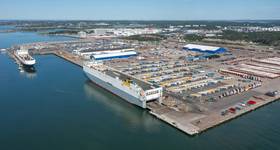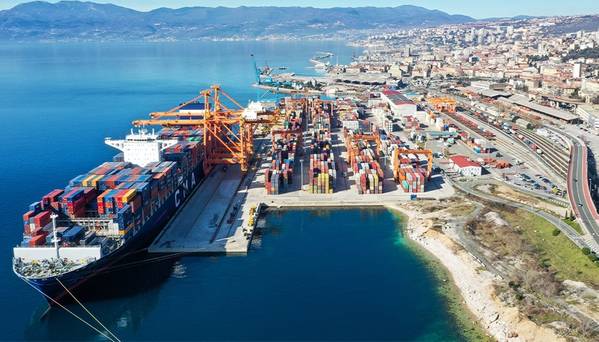
Adriatic Gate Container Terminal (AGCT), ICTSI’s operation in the Port of Rijeka in Croatia, recently attained two milestones by handling a record monthly throughput and the highest single vessel exchange.
AGCT’s new highest monthly throughput exceeds the previous record set in July 2024 by 11%, underscoring AGCT’s growing capacity and key role as Croatia’s largest seaport and regional supply chain facilitator for the Balkans and Central Europe.
“The result is even more pleasing given that we had been down to single berth operation with the 100-meter deepening project,” said Emmanuel Papagiannakis, AGCT chief executive officer. “We now see a return to two berth operations as the project is completed in October, improving the terminal’s service levels.”
Additionally, AGCT set a new single vessel exchange record with 7,120 TEUs during its servicing of the Maersk Huacho. The vessel operates in the 2M Alliance, a joint vessel sharing service by Maersk and Mediterranean Shipping Company that directly connects China and other far east ports in the Adriatic region. In the same month, AGCT also achieved an all-time high on the Ocean Alliance, comprised of CMA CGM, COSCO, Evergreen and OOCL, with 3,193 TEUs.
Rail throughput reached more than 41% of total throughput.