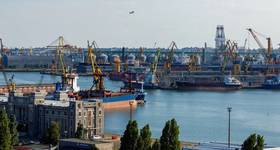
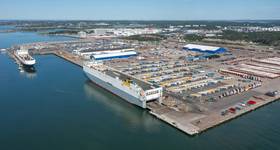
Europe’s second-largest seaport, the Port of Antwerp in Flanders, Belgium said that with a 6th year record, growth in all cargotypes and a recent wave of investments, 2018 will be a 'grand cru' year.
"The confirmation of the port's attractiveness and the consolidation of its position as a global player and the largest integrated European chemical cluster are essential to the continuity of its role as the largest economic engine of Belgium," claimed a press release from the port.
With a growth of 5.2% compared to 2017, the earlier forecasts for a 6th consecutive year record are confirmed. The total transhipment in 2018 was 235.2 million tonnes, a new record, with unprecedented growth in all cargotypes.
The strong growth in container traffic continued to 130.9 million tonnes (+6.4%) or 11.1 million TEU (+6.2%). All trades recorded growth, both in supply and export, with the only exception of supplies from the Middle East and Latin America, which showed a slight decrease.
The total breakbulk transhipment shows a slightly positive figure with a growth of 1%. The RoRo cargo grew by 5.4% to 5.3 million tonnes. The number of shipped passenger cars increased by 4.7% to just under 1.3 million.
In 2018, 14,595 seagoing vessels (+2.6%) called at Antwerp. The gross tonnage of these ships increased by 3% to 418,838,751 GT.