Three New STS Quay Cranes at Khalifa Port
By Aiswarya Lakshmi
December 28, 2016
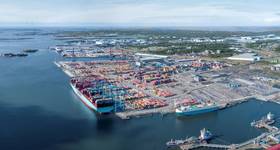
Abu Dhabi Terminals (ADT) announced the arrival of three of the largest ship-to-shore quay cranes in the world, to accommodate growing volumes and demand at Khalifa Port Container Terminal (KPCT), WAM reports.
Transported from China on specially-built vessels, the latest additions complement the current nine STS cranes already operational at the facility.
The Super Post Panamax cranes, commissioned from Shanghai Zhenhua Heavy Industry Co. Ltd. (ZMPC), were delivered on 10 November, 2016, and follow ADT’s recent milestone of five million TEUs being handled at KPCT, since its establishment in 2012.
The STS cranes are designed to the highest industry specifications, capable of handling the world’s largest container ships (VLCCs) and will provide an additional capacity of 600,00 TEUs per annum to complete Phase 1 of 2.5 million TEU’s of capacity at the port facility.
One of the STS cranes measures 126.5 metres in height and weighs 1,932 tonnes, with an outreach of 65 metres (covering 26 rows) and a lifting capacity of 90 tonnes. This new equipment will ensure continued and sustained cargo growth and provide increased value, efficiency, and speed for Port Khalifa’s customers.