marine link image
Register now for the Port of the Future Conference • 2 Days, 50 Ports • Houston/Galveston area, TX • April 12–14, 2027

BV AiP for Solid Sail, which aims to slash Cruise Ship Emissions

March 25, 2022

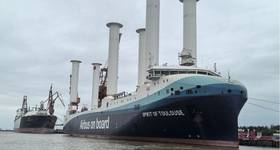
Chantiers de l’Atlantique's innovative sailing propulsion system 'Solid Sail' receives Approval in Principle from Bureau Veritas. © Chantiers de l’Atlantique

Bureau Veritas (BV) delivered an Approval in Principle (AiP) to Chantiers de l’Atlantique for its sailing propulsion system, Solid Sail, tailored for the large ships market.


Solid Sail is a 1,200 sq. m. rigid sail made of composite panels assembled together, which was developed specifically for large vessels. The system overcomes the usual size limitations of standard fabric sails. Moreover, the rigidity of the sail panels induces less flapping and therefore increases the estimated life compared to a soft sail.

Increasing the energy efficiency of cruise ships and lowering their impact on the environment are two of the main objectives of Ecorizon, Chantiers de l’Atlantique’s 14-year old R&D program dedicated to ship energy and environmental efficiencies.

Logistics News

Gulf Oil Producers Build Tanker Fleet as Security Risks Mount Around Hormuz

Gulf Oil Producers Build Tanker Fleet as Security Risks Mount Around Hormuz

Russia Extends Diesel Export Ban Until Year End

Russia Extends Diesel Export Ban Until Year End

Dockworkers Strike Against Arms Shipments at More Than 100 Ports Globally

Dockworkers Strike Against Arms Shipments at More Than 100 Ports Globally

NorthPort Receives Four New Hybrid RTG Cranes

NorthPort Receives Four New Hybrid RTG Cranes

Subscribe for Maritime Logistics Professional E‑News

US airlines oppose China’s bid to increase flights
Alaska Air expects certification of the Boeing 737 MAX 10 by end-September
Oil giants rush in to help Italy's Meloni reduce energy costs by introducing fuel price caps